Social network for gamers.
copperingots
111 logs · 3 posts
Life is Strange is a really enjoyable choice-based adventure and, for me, one of the most interesting games of its kind. The main mechanic of rewinding time and seeing how your choices can affect situations gives the game a really strong Butterfly Effect feeling, making even seemingly insignificant decisions feel important. What I liked the most is how well the characters are integrated into the world. Almost everyone has their own personality, relationships and problems, and some characters become surprisingly deep as the story progresses. The relationship between Max and the people around her is a big part of what makes the story so engaging. The atmosphere is also fantastic, with a very distinctive style that fits the melancholic and mysterious tone of the story perfectly. It’s not a perfect game and some parts are definitely weaker than others, but the combination of its characters, atmosphere and choice system makes it a very memorable experience.
Call of Duty: WWII is probably my favorite Call of Duty set during World War II. The campaign has a very classic Call of Duty structure, but the story is genuinely enjoyable and includes some well-executed twists that kept me interested. The biggest strength for me is definitely the atmosphere. The environments and the way the battles are presented make the war feel much more immersive, almost as if you were actually there. The game does a great job of creating that cinematic feeling without losing the fast and satisfying Call of Duty gameplay. It’s not a revolutionary campaign and there are definitely some familiar elements, but the combination of a good story, memorable moments and a convincing World War II setting makes it one of the better WWII entries in the series.
Call of Duty: Vanguard is a decent Call of Duty campaign, even if it doesn’t do anything particularly new. The World War II setting has already been used many times in the series, so a lot of the experience feels familiar, but I still found the campaign enjoyable to play. The gunplay is solid and there are some good missions, with the game jumping between different fronts of the war and following a group of soldiers with different backgrounds. Some of these sections are more memorable than others, but overall I didn’t find the campaign as bad as some people make it out to be. The biggest problem is that it feels quite short and linear, and the story isn’t particularly memorable. It often feels more like a collection of classic WWII action sequences than a truly cohesive story. Still, for what it is, I had a decent time with it. Overall, a fairly average Call of Duty campaign: nothing amazing or particularly memorable, but definitely not a bad one either.
CARRION is a really interesting and original concept, especially because you play as the creature instead of the humans trying to survive. Moving through the facilities, hunting people and growing stronger is definitely the most enjoyable part of the game. Unfortunately, the gameplay became increasingly repetitive for me. After several hours, I felt like I was constantly doing variations of the same things, especially when it came to navigating the facilities and opening the reinforced doors by moving through small passages in the walls. The new abilities help keep things somewhat fresh, but eventually they weren’t enough to stop the repetition. I played around ten hours before eventually dropping it, despite being fairly close to the end. I still think it’s a good game with a very cool concept, but the repetition ultimately made it difficult for me to keep going. Definitely not a bad game, just an experience that started to lose its appeal over time.
Bodycam is one of those games I believed in almost immediately. When I first saw the reveal trailer, I genuinely thought some of the footage was real. The graphics are absolutely insane and, in my opinion, probably the most realistic I’ve seen in a video game. The environments, weapon animations, movement and overall presentation create an incredible sense of realism. The multiplayer is probably the weakest part for me. I don’t always feel that level of competitiveness or depth that I would expect from a multiplayer shooter, and there are still some mechanics that could definitely be improved. The gore is another aspect that I think needs some work. I understand that making completely realistic damage and body reactions could have a huge technical impact, especially in multiplayer, but it would still be nice to see it improved. I also understand the decision to blur faces, since reproducing realistic human faces at this level is extremely difficult and could easily break the illusion. Despite these flaws, the technology behind Bodycam is incredible. It’s still an Early Access game, and seeing how much the developers are continuing to improve it makes me very optimistic about its future. The upcoming Locked & Loaded update looks particularly promising, and I’m really looking forward to seeing how much it improves the experience.
Buckshot Roulette is a surprisingly original and entertaining game. The concept is simple, but the gameplay manages to create a lot of tension and keeps you engaged throughout the experience. It is relatively short, which is probably its biggest limitation, but I don’t think that hurts the experience too much. The atmosphere is one of its strongest aspects, with a dark and unique mood that fits the gameplay perfectly. The soundtrack also deserves a special mention. The music is genuinely great and does a lot to build the atmosphere and tension of each round. Overall, a short but very memorable experience with a concept that feels different from most games.
Valorant is a game I tried because I already enjoyed League of Legends and wanted to see what Riot could do with a competitive shooter. Unfortunately, it didn’t really click with me. The biggest problem is that it feels very similar to Counter-Strike, but with an additional layer of complexity because of the different agents and their abilities. Instead of feeling like a completely new experience, it often felt to me like a more complicated version of Counter-Strike with powers added on top. I can understand why people enjoy the combination of tactical shooting and abilities, and there is clearly a lot of depth to master, but personally I didn’t find it particularly appealing. It’s not necessarily a bad game, just a formula that didn’t work for me.
Call of Duty: Black Ops Cold War is probably one of the weaker Call of Duty campaigns I’ve played. The gameplay itself is still enjoyable, with the classic Call of Duty gunplay and some interesting missions, but unfortunately there isn’t enough here to really make the experience stand out. Some of the Vietnam missions are definitely among the better parts of the game, with a few really memorable sequences. However, I didn’t particularly enjoy the more psychological and mind-bending sections. The whole mind-game aspect felt quite confusing and sometimes unnecessarily dispersive rather than genuinely interesting. The story also didn’t do much for me. There is an interesting twist towards the end and some decent moments, but overall I never felt particularly invested in the characters or the narrative. It’s not a completely bad Call of Duty, because there are definitely some good missions and the gameplay is still fun, but as a whole it left me pretty underwhelmed.
Call of Duty: Modern Warfare III is still a fun campaign and keeps the strong gameplay and incredible presentation of the previous two games. The graphics and cutscenes remain extremely realistic, and some moments genuinely feel like watching an action movie. Unfortunately, I didn’t really like the direction they took with some of the gameplay. The Open Combat missions and especially the introduction of mechanics like armor plates and movement elements taken from Warzone make the campaign feel much closer to a multiplayer experience. In the first two games there was a much clearer distinction between the campaign and Warzone, while here that separation feels almost gone. The campaign is also quite short, which is another problem considering the price of the game. Despite that, the core gameplay is still enjoyable and the presentation remains excellent. It’s not as good as the first two for me, but there is still a fun campaign underneath it all.
Call of Duty: Modern Warfare II continues the formula of the first game with another very enjoyable campaign. The gameplay is still classic Call of Duty, but there are some great missions that give the campaign plenty of variety. Once again, the graphics and cutscenes are one of the biggest highlights. The level of realism is incredible, and some scenes genuinely look more like a movie than a videogame. The campaign also does a good job of mixing traditional firefights with stealth and other different situations. My main criticism is still the length. For the price of a full game, the campaign feels too short, especially when compared to how much effort clearly went into its presentation and production. Still, the experience itself is very enjoyable and well made.
Call of Duty: Modern Warfare is one of the most enjoyable campaigns in the series. The gameplay is classic Call of Duty, but still incredibly fun, with some really memorable missions and an impressive amount of attention to detail. The graphics and especially the cutscenes are incredible. Some moments look almost photorealistic, to the point where it can genuinely feel like watching a movie. My favorite mission of the entire trilogy is definitely “Clean House”, the night-time house raid with night vision. The atmosphere, lighting and attention to detail make it an unforgettable mission. The only real problem is that the campaign is quite short considering the price of the game, but what is there is extremely well made. Overall, a fantastic campaign with some of the best presentation I’ve seen in a Call of Duty game.
Call of Duty: Warzone is a fun and highly competitive PvP game, but it can also become extremely frustrating. The gunplay is satisfying and winning a match feels genuinely rewarding, but the competitive side of the game can be very demanding. One of my biggest problems is the constant weapon meta. Every season can bring new weapons that become significantly stronger than others, meaning that if you want to stay competitive, you’re almost forced to keep playing and leveling up the current meta weapons to unlock all their upgrades. Even if you’re a better player, being at a disadvantage because your weapon isn’t properly leveled or simply isn’t part of the current meta can make a huge difference in a gunfight. Because of this, Warzone requires a lot of time if you actually want to compete at a high level. I still had fun playing it, but I gradually played less because the grind and the constant changes to the meta became more frustrating than enjoyable. Overall, a good PvP experience, but definitely not a game for everyone.
Getting Over It is an incredibly frustrating and difficult game, but that is exactly what makes it work. The game is clearly designed to make you angry and test your patience, and after finally completing it, you get a huge sense of satisfaction that makes all the frustration feel worth it. The controls are simple but extremely difficult to master, and even a small mistake can completely ruin your progress. I spent a lot of time getting frustrated while playing it, but I don’t really see that as a negative, because it’s clearly intentional. It’s a simple concept executed extremely well, and reaching the end genuinely feels like an achievement. Definitely not a game for everyone, but if you enjoy challenging yourself and overcoming frustrating obstacles, it’s a very satisfying experience.
Geometry Dash is a game that I tried to get into, but ultimately it’s just not really my type of game. It requires an incredible amount of precision, patience and practice, and some levels can take countless attempts before you finally get them right. That said, I can’t say it’s a bad game. The music is one of its strongest aspects and is deeply connected to the gameplay, making the levels feel much more satisfying when you get into the rhythm. There’s also a huge amount of content and a very active community creating new levels. I managed to complete an Easy Demon, which is probably the furthest I’ve gone with the game, so I definitely gave it a fair chance. It’s simply not a genre I particularly enjoy, but I can understand why so many people love it. Overall, a solid experience, just not really for me.
League of Legends is one of the games that really helped define competitive PvP as we know it today. It has a very deep gameplay system and an enormous amount of content, but that also makes it extremely difficult to master, especially when it comes to ranked. I had a lot of fun playing it, but over time I gradually played less because the ranked experience can become incredibly frustrating. Climbing can be a real challenge, and the competitive nature of the game can make every loss feel particularly annoying. It’s definitely not a game for everyone. I can understand why some people dislike it or find it frustrating, especially because of how demanding and competitive it can be. But if you enjoy this type of PvP and are willing to put the time into learning it, there’s a huge amount of depth to discover. Overall, a very influential and genuinely fun competitive game, even if it can be extremely frustrating at times.
Happy Room is a simple and fun game to mess around with for a while. It was more entertaining when it was popular, but nowadays it feels quite outdated and has lost much of its appeal. There isn’t much depth or variety, so it’s mostly a game you play just to pass some time and experiment with the different traps. Still enjoyable for what it is, but definitely nothing particularly memorable.
Ghost Recon Breakpoint is a decent game with some enjoyable gameplay mechanics, especially when it comes to its tactical approach. There are some interesting ideas, but unfortunately they don’t always feel fully developed. The biggest problem for me is the repetition. After a while, many missions start to feel very similar, and the huge open world can feel surprisingly flat and empty. Even the shooting and weapon mechanics, which are such a central part of the game, felt quite bland to me. The mechanics are relatively dated and far from realistic, which makes the combat lose some of its appeal after a while. Overall, it’s not a bad game and I did have fun with some of its mechanics, but it never managed to keep me really engaged for long. A decent experience, but nothing particularly memorable.
Hatred is a game that is mostly about causing chaos and going on rampages, and honestly, that works reasonably well for what it is trying to be. The gameplay is simple but satisfying, especially when it comes to the executions and their animations. The biggest problem is that there isn’t much more to it. The story is extremely predictable and almost nonexistent, and the game can feel quite dated in some aspects. It’s more of a game you play to mess around for a while rather than something with much depth. It can also become more interesting with some Steam Workshop mods, which add a bit more variety to the experience. Still, overall, it’s nothing extraordinary. A decent game to mess around with, but definitely not one I would consider essential.
HITMAN 3 keeps everything that worked in the previous two games, but for me it manages to take another step forward. The stealth gameplay is still incredibly fun, even if some mechanics are starting to feel a little dated. The maps are probably the strongest part of the game. I enjoyed them even more than those in the previous two entries: they are extremely detailed, creative and full of different possibilities for taking down your targets. It’s hard to find a truly bad location in the entire trilogy. The NPCs can still be a little stupid at times and the story isn’t anything extraordinary, but this time we also get a proper conclusion to Agent 47’s story, which makes the whole experience feel more complete. For me, this is the best of the three. The fantastic maps, satisfying gameplay and conclusion to the trilogy make it a very well made saga
HITMAN 2 continues almost exactly what the first game started, with the same satisfying stealth gameplay and some fantastic maps. The mechanics are starting to show their age a little, but they still work extremely well. Once again, the map design is easily the best part. The locations are huge, detailed and packed with different possibilities, making every assassination feel like its own little puzzle. The NPCs can still be quite dumb sometimes and the story isn’t anything incredible, but the gameplay and level design make up for it. Overall, another very solid entry in the trilogy.
HITMAN is a really enjoyable stealth game with some very interesting mechanics, even if you can start to notice that some of them feel a little dated today. The gameplay is fun and gives you a lot of freedom in how you approach each assassination. The real masterpiece for me is the map design. The locations are incredibly detailed, full of possibilities and different ways to approach your targets. I honestly can’t think of a map that I found genuinely bad. The NPCs can be a little stupid at times, but it doesn’t ruin the experience. The story is also nothing extraordinary, but it’s enjoyable enough to keep you interested. Overall, a very good stealth game and a great start to the trilogy.
WorldBox is a really fun sandbox game to play when you just want to relax and mess around. You can create your own world, populate it with different civilizations and simply watch them grow, fight, form alliances or destroy each other. The pixel-art style works perfectly for this kind of game. It may not look realistic at all, but that’s clearly an intentional design choice and gives WorldBox its own charm. There’s also a surprising amount of freedom in what you can do, and the game keeps receiving new content and features over time. It’s definitely not a game with endless depth or a clear objective, but that’s not really the point. It’s a great game to spend some time with, experiment and create your own little stories. Overall, a very enjoyable sandbox experience.
No Man’s Sky is one of those games with a concept that is simply incredible. The idea of an essentially infinite, procedurally generated universe that you can freely explore is still something that amazes me. The launch was obviously surrounded by a lot of controversy, with many promised features missing or not living up to expectations. However, I really appreciate what Hello Games has done since then. Years of free updates have completely transformed the game, adding an enormous amount of content and gradually turning it into the experience it was originally supposed to be. The exploration is easily one of the strongest aspects. There are countless planets, creatures, environments and places to discover, and the feeling that you can simply travel wherever you want makes the universe feel genuinely huge. It’s not perfect, and some mechanics can still become repetitive, but the ambition and the amount of content are incredible. No Man’s Sky has come an incredibly long way since launch, and today I think it’s a fantastic game that deserves to be experienced.
Jurassic World Evolution 2 is one of the better management games I’ve played. It’s very well made, with a lot of structures, different maps and plenty of options for building and managing your own park. The graphics are also a big highlight. The dinosaurs look incredibly detailed and realistic, and the overall presentation makes the parks feel genuinely alive. The gameplay is fun and gives you a lot of freedom in how you want to build and manage everything. It’s not perfect, and some aspects of the management can become a little repetitive, but overall it’s a very enjoyable experience. I’m not even particularly interested in dinosaurs, yet I still found myself having a great time with it.
The Walking Dead: Michonne is a decent spin-off that I enjoyed mainly because I already knew the character from the TV series. It was interesting to explore Michonne a little more and see another story set in the same universe. However, compared to the main story, it feels much less important and memorable. It’s a short side story that doesn’t add much to the overall narrative, and I found myself much more interested in what was happening with the main characters. It’s not a bad experience, but it feels more like a small extra for fans of The Walking Dead rather than an essential part of the series. Still, it was nice to get some more content focused on Michonne.
The Walking Dead: The Final Season is an incredible conclusion to Clementine’s story and, for me, one of the best seasons of the entire series. Seeing how much Clementine has grown throughout the games is one of the strongest parts of the experience, and her relationship with AJ adds a completely new dimension to her character. The school setting also works extremely well. Watching Clementine build relationships with the other survivors while slowly becoming a leader and a mentor makes the whole season feel like a natural continuation of her journey. Without going into spoilers, I really loved how the game handles Clementine’s personal growth and brings her story to a satisfying conclusion. It may not quite reach the level of the first season for me, but it comes very close. An absolutely fantastic final chapter and a must-play for anyone who followed Clementine’s journey from the beginning.
The Walking Dead: A New Frontier is another solid chapter in the series and, considering how invested I was in the story by this point, I was definitely interested in seeing how everything continued. The main difference is that this time you don’t play as Clementine, but as a new protagonist. This was probably the aspect I liked the least, even though Clementine remains an important part of the story and her presence ties the season back to the previous games. I also really liked the connections to the first season and, especially, the references and characters connected to the TV series. Having already watched and enjoyed the show, seeing some of those elements appear here was a really nice touch. Overall, probably the weakest of the three seasons so far, but still a very enjoyable continuation of Clementine’s story and a good chapter in the series.
The Walking Dead: Season Two is a great continuation of the story, this time putting Clementine directly in the role of protagonist. Seeing her grow and become much more independent throughout the season is one of the strongest aspects of the game. The story is still very engaging, with plenty of emotional moments, difficult choices and memorable characters. I found it slightly weaker than the first season, especially in terms of the impact of some characters and certain moments, but it still manages to deliver a fantastic narrative experience. Overall, a very worthy continuation that manages to give Clementine her own story without losing what made the first season so special.
The Walking Dead: Season One is an incredible choice-based experience and, for me, one of the best games of its kind. After the three Quantic Dream titles, this is easily my favorite choice-driven game. The story is emotional and extremely engaging, with memorable characters and decisions that constantly put you in difficult situations. The first season is also the strongest part of the series for me. Without getting into spoilers, there are several reasons why I consider it the best, especially when it comes to the characters and how their relationships develop throughout the story. It’s one of those games that keeps you invested from beginning to end and leaves a lasting impression. An incredible experience and absolutely recommended.
Ghost of Tsushima is a fantastic game with a beautiful story and extremely satisfying gameplay. The combat is probably one of my favorite aspects, as it feels precise, fluid and rewarding, while the world and its atmosphere make exploring Japan genuinely enjoyable. The game does show some rough edges in certain areas, especially when it comes to animations and some aspects of the overall presentation. You can occasionally feel that it didn’t have the same resources as some of the biggest AAA productions, but these flaws never take away too much from the experience. Overall, Ghost of Tsushima is a beautiful and very enjoyable game with a great story, satisfying combat and an incredible atmosphere. Definitely one of the stronger open-world games I’ve played.
Not my tipe of games at all
I’ve only played a couple of hours so far, so I don’t feel like I can properly rate NieR:Automata yet. I put it on hold because I had other games to play, and unfortunately the story didn’t immediately grab me. I’ll definitely come back to it, though, especially considering how highly the game is regarded and how much praise its story and narrative structure have received. For now, I’d rather wait until I’ve experienced more of the game before giving it a proper rating.
Minecraft is one of those games that almost never gets boring because there is always something new to do. Its biggest strength is the incredible freedom it gives you: you can play completely vanilla, focus on survival and exploration, build whatever you want, play PvP, use mods, or simply create your own goals. The fact that every world is different and that there are so many ways to approach the game gives it an incredible amount of replayability. You can spend hundreds of hours playing and still find something you haven’t experienced before. It’s not perfect, especially when it comes to combat and the lack of a traditional story, but I don’t think that’s really what Minecraft is trying to offer. Its strength is giving you a world and letting you decide what to do with it. Minecraft is simply a timeless game. It’s incredibly creative, relaxing, chaotic and fun, and there’s a reason it has remained relevant for so many years.
Dispatch is a very enjoyable and surprisingly original game. The choice-based narrative works really well, and the characters and relationships are definitely one of the strongest parts of the experience. The main gameplay mechanic, where you manage and dispatch heroes from your computer, can feel a little repetitive at times. However, I understand why it is there, since the decisions you make and the relationships you build throughout these sections have an impact on the rest of the game. Despite that, I really enjoyed the overall experience. The story, characters and choices make Dispatch stand out from other games of its kind, and I think it’s a very solid and well-made experience.
Horizon Zero Dawn is a game I really tried to enjoy, but unfortunately it never managed to grab me. The idea of a post-apocalyptic world filled with mechanical creatures is definitely original, and I can understand why many people enjoyed it, but personally I found the experience quite boring. The gameplay became repetitive for me very quickly, and I never really connected with the world or its characters enough to keep me interested. The mechanical creatures are an interesting concept, but the overall gameplay loop just didn’t work for me. I also have to admit that this type of game simply isn’t my thing, especially when it comes to the mechanical creatures and the way the combat is structured. I gave it a fair chance, but in the end, it just wasn’t an enjoyable experience for me.
Cuphead is an incredibly fun and almost unique game in its genre. Its cartoon-inspired art style fits the gameplay perfectly, creating a visual experience that feels genuinely special. The music, sound design, voice acting and gameplay are all fantastic, and the boss fights are one of the strongest aspects of the game, even if they can be quite challenging. After finishing the game both in single player and multiplayer, I noticed a significant difference in difficulty. In single player, the bosses are less aggressive and generally have less health, or you simply deal more damage to them. In multiplayer, they become much more difficult to take down, making the experience noticeably harder. Overall, Cuphead is a beautiful, challenging and incredibly well-made game with a unique identity that really stands out.
Heavy Rain is a fantastic psychological thriller and, for me, the second best of the three games from Quantic Dream that I’ve played. The story is incredibly engaging, with constant suspense, great twists and turns, and characters that kept me invested from beginning to end. What I enjoyed most is how the different characters and their stories gradually come together, while the choices keep you involved throughout the entire experience. It’s the kind of game that really keeps you glued to the screen. The only reason I wouldn’t rate it higher is that, understandably for a game from its time, some aspects have aged quite a bit, especially the visuals, animations and gameplay. That’s not really the game’s fault, but it is noticeable today. Overall, still a fantastic experience and one of Quantic Dream’s best.
Balatro is a surprisingly original and addictive game that manages to turn something as simple as poker into a much deeper experience. The combination of jokers, cards and different synergies creates a lot of possibilities, and finding a build that completely changes the way you play is genuinely satisfying. The main issue for me is that the gameplay can become repetitive after a while. Once you understand the core loop, a lot of runs can start to feel quite similar, especially compared to other roguelikes with more variety in their moment-to-moment gameplay. That said, I really appreciate how simple the game is to understand while still having a surprising amount of depth. It’s a very well-designed and original concept, but personally I don’t think it has enough variety to put it among the very best games of its genre.
Papers, Please is a simple game with a surprisingly original concept. The gameplay is straightforward, but it manages to stay engaging and satisfying thanks to the decisions you have to make and the consequences that follow them. I also really liked the fact that the game has multiple endings, which gives you a reason to replay it and see how different choices can change the outcome. It’s not the most complex game out there, but it doesn’t need to be. Its simplicity is part of what makes it work so well. Overall, a very original and enjoyable experience that surprised me more than I expected, even for mobile.
DOOM Eternal is an incredible game and, in my opinion, one of the best modern FPS games ever made. It takes everything that worked in DOOM (2016) and improves it in almost every way. The gameplay is fast, brutal and extremely satisfying, with a huge arsenal of weapons and a much greater variety of ways to approach combat. The game rarely feels repetitive because you constantly have to switch between weapons, abilities and strategies depending on the situation. The parkour is another great addition. Moving through the environments feels much more dynamic than in DOOM (2016), with wall climbing, dashing and platforming sections integrated naturally between combat arenas. There are also relatively few cutscenes, so the game constantly keeps you moving, whether you’re fighting, exploring or navigating the environment. Some of these sections also offer fantastic views and give you a chance to appreciate the world outside of combat. The Doom Slayer is also an incredibly iconic protagonist, and the combination of his lore, the heavy soundtrack and the overall atmosphere makes the game feel absolutely badass. I also really appreciate how little the game relies on its story. It focuses almost entirely on gameplay, while still giving you enough lore and context to understand what is happening. DOOM Eternal takes the formula from the 2016 game and gives it much more depth, mobility and variety. It’s fast, violent, challenging and incredibly fun to play.
DOOM: The Dark Ages is an incredible entry in the series. At first glance, the gameplay might seem very similar to the previous games, but once you actually play it, you realize how much it changes the formula. It feels slower and perhaps a little easier, but that definitely doesn’t make it any less fun. The shield is probably my favorite addition. It’s incredibly versatile and adds a completely new layer to the combat, giving you more options and making encounters feel different from the previous games. The overall production quality is also noticeably higher. The environments, visuals, animations and presentation really show how much the series has evolved. With The Dark Ages, DOOM feels like a full-fledged AAA experience, without losing the brutal and satisfying gameplay that makes the series so unique. Overall, a fantastic game and a great new direction for DOOM.
The Ancient Gods is a fantastic expansion to DOOM Eternal, keeping the same fast and brutal gameplay while adding enough new mechanics to make the experience feel fresh. The new weapon and additional gameplay elements introduce new ways to approach combat without losing what made the base game so enjoyable. The DLCs are also very important for the lore of DOOM. Without going into spoilers, they expand the story considerably and introduce some extremely important characters and events that give much more context to the Doom Slayer and the world around him. Overall, it’s more of the DOOM Eternal gameplay that I already loved, but with new mechanics, a different challenge and a much deeper focus on the story. A great expansion that feels like a meaningful continuation rather than just extra content.
The Ancient Gods is a fantastic expansion to DOOM Eternal, keeping the same fast and brutal gameplay while adding enough new mechanics to make the experience feel fresh. The new weapon and additional gameplay elements introduce new ways to approach combat without losing what made the base game so enjoyable. The DLCs are also very important for the lore of DOOM. Without going into spoilers, they expand the story considerably and introduce some extremely important characters and events that give much more context to the Doom Slayer and the world around him. Overall, it’s more of the DOOM Eternal gameplay that I already loved, but with new mechanics, a different challenge and a much deeper focus on the story. A great expansion that feels like a meaningful continuation rather than just extra content.
Lies of P is a very good Soulslike and definitely one of the better games outside of FromSoftware. The atmosphere is fantastic, the setting of Krat is unique, and the combat is satisfying, especially with the weapon customization and parry system. However, there’s still something missing compared to the actual FromSoftware games. When you put Lies of P next to something like Dark Souls or Elden Ring, you can feel that it doesn’t quite have the same depth, freedom, or sense of discovery. It also relies heavily on ideas that have already been established by Bloodborne and other Souls games, sometimes making it feel a little too derivative. That said, it’s far from a bad game. It’s a polished and enjoyable Soulslike with plenty of good ideas, but for me it falls short of reaching the level of the games that inspired it.
DOOM is an incredible return to the roots of the FPS genre, and it’s easy to see why the series became so influential in the first place. The gameplay is fast, brutal and extremely satisfying, with an amazing arsenal and some of the most enjoyable gunplay I’ve experienced. The Doom Slayer is also an incredibly iconic protagonist, and the combination of his lore, the heavy soundtrack and the overall atmosphere makes the game feel absolutely badass. I also really appreciate how little the game relies on its story. It focuses almost entirely on gameplay, while still giving you enough lore and context to understand what is happening. My main criticism is that the gameplay can become somewhat repetitive over longer sessions, as the core mechanics don’t always offer enough variety to keep things completely fresh. Despite that, DOOM is still an excellent game and a fantastic modern take on a genre that it helped create. Fast, violent, stylish and incredibly fun to play.
Kingdom Come: Deliverance is an ambitious game with a really interesting idea behind it. I love the decision to focus on a realistic medieval world instead of the usual fantasy setting, and the attention to detail makes the world feel surprisingly alive. However, the game is also quite rough around the edges. The combat can feel clunky, some mechanics are unnecessarily complicated, and the technical issues definitely hurt the experience. At times it feels like Warhorse had a great vision but didn’t quite have the resources or experience to execute everything properly. There’s still a lot to appreciate here, especially the setting and the immersive role-playing elements. It’s a good game with a lot of personality, but compared to the sequel, it’s clear how much room there was for improvement.
Hogwarts Legacy is a huge missed opportunity for me. Hogwarts itself is beautifully made and probably the only part of the game that consistently impressed me, but almost everything surrounding it feels generic and repetitive. The open world is filled with pointless activities, repetitive quests and collectibles that quickly become a chore rather than something enjoyable. Even the combat, which is fun at first, becomes extremely repetitive because of the limited enemy variety and lack of real depth. The story doesn’t help much either. For a universe with so much potential, I found it surprisingly forgettable, with characters and events that rarely left a lasting impression. In the end, Hogwarts Legacy feels more like a beautiful Harry Potter world wrapped around a mediocre open-world game than a truly great RPG. There are some good ideas here, but they are buried under a huge amount of filler and wasted potential.
Marvel’s Spider-Man is a fantastic superhero game and, in my opinion, one of the best Spider-Man games ever made. Since this was the first entry in this particular series, the gameplay felt fresh and innovative, especially the web-swinging and combat, which are both incredibly fun and satisfying. The story is also one of its strongest points. I really enjoyed Peter Parker’s character and his relationship with the people around him, while Doctor Octopus works extremely well as the main antagonist. The story manages to give Peter a more personal side while still delivering the superhero action you would expect. The game isn’t perfect, though. Some of the side activities can become repetitive, and the overall open-world structure is fairly familiar. Still, the core gameplay, story, and the feeling of actually being Spider-Man make up for those flaws. Overall, a really enjoyable game and a strong first entry from Insomniac.
Among Us is a classic with a genuinely original concept. It was incredibly fun and popular at its peak, especially when playing with friends, and it’s easy to see why it became such a huge hit. Unfortunately, I think the game has become a little too complicated over time. The addition of so many different roles has taken away some of the simplicity that made the original experience so enjoyable. Back when the formula was more straightforward, I found it much more fun and engaging. It may have lost some of its popularity nowadays, but that doesn’t change the fact that Among Us is still a fun and creative game that had a huge impact on multiplayer gaming.
Kingdom Come: Deliverance II is a very solid medieval RPG with a lot of attention to detail. I really like the setting and the way the game tries to make the medieval world feel realistic and alive. The freedom given to the player and the amount of depth in its systems are definitely some of its strongest aspects. However, the game can be quite slow and tedious at times, and some of its realistic mechanics can get in the way of simply enjoying the game. The pacing isn’t always for me, and some systems feel more complicated than they need to be. Still, I enjoyed the experience overall. It’s a very well-made medieval RPG with a lot of ambition and personality, even if its slow pace and complexity make it far from perfect.
Marvel Rivals has a fun concept and an impressive roster of characters, but unfortunately, that’s where most of its appeal ends for me. The gameplay can be enjoyable at first, but it quickly becomes repetitive, and the overall experience starts to feel shallow after a while. The balance between characters can also be frustrating, with some feeling noticeably stronger or more useful than others. I can see why people enjoy it, especially if they’re big Marvel fans, but personally, I found it difficult to stay interested in it for long. It’s not an outright bad game, but there’s nothing about it that makes me want to keep coming back. For me, it ends up being a fairly mediocre multiplayer experience.
BioShock is one of those games that really stands out because of its atmosphere and world. Rapture is an incredible setting, with a unique art style and an oppressive atmosphere that makes exploration genuinely fascinating. The story is also one of the strongest aspects of the game, with a very interesting narrative and some memorable twists. The gameplay is enjoyable, especially thanks to the combination of weapons and Plasmids, which gives you different ways to approach combat. However, this is probably where the game shows its age the most. Some mechanics feel dated, and the combat isn’t quite as impressive as the story and world surrounding it. Despite that, BioShock is still a fantastic experience and a game that I think is worth playing even today. Its atmosphere, storytelling, and worldbuilding make it a very memorable game, even if the gameplay itself isn’t perfect.
Days Gone is a really enjoyable open-world experience with a great story and an interesting take on the zombie genre. One of my favorite aspects is the motorcycle, which feels like much more than just a vehicle. It becomes an important part of exploration and progression, and the mechanics surrounding it are very well implemented. I also really liked how the Freakers are integrated into the world. They don’t simply feel like enemies placed around the map, but actually make the world feel more alive and dangerous, especially when dealing with large hordes. The game has its flaws, but overall, I really enjoyed the experience. The combination of its story, open world, motorcycle mechanics, and unique approach to zombies makes Days Gone a very solid game.
Elden Ring Nightreign was definitely an interesting and ambitious idea from FromSoftware. I wouldn’t call it a flop, but I do think it was a risky direction to take, especially considering how close its release was to Elden Ring. The strong focus on multiplayer, which is almost essential to fully enjoy the experience, didn’t really work for me. I also wasn’t particularly fond of the Night system and the way the game structures its progression around each run. That said, I really enjoyed the idea of bringing together iconic bosses and elements from different FromSoftware games, including Elden Ring and the Dark Souls series. It’s a cool concept and there are some genuinely great moments, but overall, the multiplayer focus and core structure just weren’t really for me.
Shadow of the Erdtree is an incredible expansion and, while it doesn’t quite reach the level of the base game for me, it comes surprisingly close. The boss fights are some of the most challenging and memorable FromSoftware has created, and the variety of encounters keeps the experience exciting throughout. The map is probably my favorite aspect of the DLC. The different biomes and areas are incredibly well designed, with each region having its own atmosphere and identity. From the areas surrounding the Frenzied Flame to the mountains around Bayle and the regions affected by Scarlet Rot, the world feels dense, mysterious, and rewarding to explore. It’s a fantastic expansion that adds a huge amount of quality content to an already incredible game. Definitely one of the best DLCs FromSoftware has ever made.
The Ringed City is a fantastic final DLC for Dark Souls III and a great way to close the trilogy. The new areas are beautiful and full of secrets, while the boss fights are definitely one of the highlights, with several memorable and challenging encounters. I also really enjoyed how the DLC connects different elements of the Dark Souls universe and gives the series a fitting conclusion. It may be a little short, but the quality of the content makes up for it. Overall, a great expansion and a worthy ending to one of FromSoftware’s most iconic series.
Bloodborne is an incredible game and, in my opinion, one of FromSoftware’s best works. The atmosphere is absolutely phenomenal, with its dark Gothic setting, disturbing creatures, and Lovecraftian influences creating a world that feels completely unique. The combat is also one of its strongest aspects. It encourages a much more aggressive playstyle than the Dark Souls games, and the faster pace makes every encounter feel intense and satisfying. The weapon transformations are also a fantastic addition, giving the combat a lot of variety without making it feel unnecessarily complicated. The boss fights are memorable, the world is beautifully interconnected, and the story and lore are incredibly deep, especially if you take the time to explore and piece everything together yourself. Bloodborne doesn’t explain everything to you, and that makes discovering its secrets even more rewarding. There are a few flaws, but they are minor compared to everything the game does right. For me, Bloodborne is one of FromSoftware’s finest games and easily one of the best Souls experiences ever made.
Dark Souls is definitely one of FromSoftware’s most important and influential games. It feels quite dated nowadays, especially when it comes to the gameplay and some of its animations, but I can still appreciate what it achieved for its time. The world and atmosphere are incredible, with a level of exploration and interconnected level design that still stands out today. The story is also one of the game’s strongest aspects, even though it isn’t told in a traditional way. The way the lore is hidden throughout the world makes discovering it feel genuinely rewarding. It’s definitely an older experience and not always an easy one to get into, but there’s no denying how important and brilliant Dark Souls was in shaping the games that came after it.
Scholar of the First Sin is probably the best way to experience Dark Souls II. It keeps the same core experience, but improves it with the additional content, revised enemy placements, and various changes that make the world feel more complete and challenging. The three DLCs are definitely one of the strongest parts of the package, offering some great areas, bosses, and exploration. I still think Dark Souls II is the weakest of the trilogy, and Scholar doesn’t completely change my opinion on that, but it does make the experience better and more polished overall. It’s still a great Souls game, just one that I personally enjoyed less than the other two entries in the trilogy.
Dark Souls II is a good game, but in my opinion, it’s the weakest of the Dark Souls trilogy. It has plenty of good ideas, a lot of build variety, and some interesting mechanics, but compared to the other two games, it feels like it falls short in several important areas. The level design and some of the bosses are not as memorable, and the world doesn’t have quite the same atmosphere or sense of discovery as the other entries. At times, it feels like it’s trying to follow the Dark Souls formula without fully understanding what made the original so special. That said, I still enjoyed it. It’s a good Souls game with a lot of content and some genuinely great moments. It’s simply the weakest of the trilogy for me, which says more about how strong the other two are than about Dark Souls II being a bad game.
In my opinion, Dark Souls III is the best game in the Dark Souls trilogy. It feels like the most polished and refined version of the formula, with incredibly smooth combat and some of the best bosses in the series. The boss design is probably one of the strongest aspects of the game. The fights are challenging but generally feel fair, and many of them are genuinely memorable. The level design is also great, with plenty of secrets and areas worth exploring. I also really like how the game brings together many elements from the previous titles while giving the trilogy a proper conclusion. It may not reinvent the formula, but it perfects many of the things that made Dark Souls great in the first place. Overall, one of my favorite FromSoftware games.
Honestly, Assassin’s Creed Shadows was one of the biggest disappointments I’ve had with the series. I’ve played almost every Assassin’s Creed game, and I’ve never felt that a game had fallen this far below the standard I expect from the franchise. It feels rushed and unfinished in many areas, with too many elements that seem underdeveloped or left halfway. Instead of taking the time to properly polish the game, it feels like Ubisoft was more focused on getting another Assassin’s Creed title out as quickly as possible. I genuinely think the better choice would have been to delay it for as long as necessary and give the developers the time to properly finish and refine it. At this point, it feels like Ubisoft is trying to squeeze as much as possible out of the franchise, and unfortunately, Shadows is where I noticed that the most. For me, this is easily the weakest Assassin’s Creed game I’ve played. I’m honestly disappointed, because I really wanted to see the series succeed, but this entry made me feel like it doesn’t even deserve to carry the Assassin’s Creed name.
Assassin’s Creed Mirage is a decent return to the roots of the series, but unfortunately, it didn’t leave a particularly strong impression on me. I appreciated the focus on stealth and investigation, and Baghdad is a beautiful and well-designed setting that fits the classic Assassin’s Creed style very well. However, I found the story and characters somewhat forgettable, and the gameplay can become repetitive after a while. The combat is also nothing particularly special, while the parkour sometimes feels a little stiff and lacking in fluidity. Overall, it’s not a bad game, and I appreciate Ubisoft trying to return to the classic formula, but I found it to be a fairly average and somewhat forgettable entry in the series.
In my opinion, Assassin’s Creed Valhalla is the last truly great entry from Ubisoft. I really enjoyed the gameplay, especially the skill system and the different ability branches, which are well designed and give you a lot of freedom in how you build your character. The overall combat and progression systems are also very satisfying, and the Viking setting fits the game extremely well. My main criticism would be the map, which feels too large and spread out at times, making certain areas feel somewhat boring and repetitive. Despite that, Valhalla is still a very solid and enjoyable game, and one of the stronger entries in the modern Assassin’s Creed formula.
Still a forgettable DLC, but slightly better than The Curse of the Pharaohs.
forgettable DLC
Assassin’s Creed Origins is where the series truly changes direction. Compared to the previous entries, the gameplay is radically different, introducing a much more RPG-focused system that I found incredibly fun and satisfying to play. The story is also very enjoyable, with a great protagonist and a fascinating setting. Ancient Egypt is an amazing period to explore, and the world is beautifully designed around it. Overall, Origins is a fantastic Assassin’s Creed game and, in my opinion, a major turning point for the entire series.
Assassin’s Creed Syndicate is a solid entry in the series. The Victorian-era setting is really well done and gives the game a unique atmosphere. The story is decent, although it didn’t really manage to grab me as much as I would have liked. What stands out the most is the gameplay, which takes a significant step away from the traditional Assassin’s Creed formula. It doesn’t completely reinvent the series yet, but it introduces a new direction that would eventually lead to the much bigger gameplay changes seen in Origins. Overall, a good and enjoyable Assassin’s Creed game, even if the story didn’t leave a particularly strong impression on me.
Assassin’s Creed Unity is another fairly average entry in the series for me. The setting of the French Revolution is interesting, and Paris is probably one of the most impressive cities in the franchise, but the game never really managed to grab me. The gameplay is enjoyable, but it doesn’t feel like a huge step forward from the previous games, and some of the parkour can be quite clunky. I also wasn’t particularly impressed by the story or the new co-op features. They are interesting additions, but they never felt essential to the experience. Overall, it’s not a bad Assassin’s Creed game, but it’s another chapter that I found rather forgettable compared to the stronger entries in the series.
I only played the 2018 Remastered version, but unfortunately, Assassin’s Creed Rogue was a pretty forgettable experience for me. It feels like one of the more underwhelming and flat entries in the series, without really bringing enough new ideas to make it stand out. The concept of playing as a Templar is interesting, but I don’t think the game makes the most of it. Overall, it’s not necessarily a bad game, but it feels completely skippable compared to the stronger entries in the series.
Honestly, there isn’t much to say about this one. The gameplay is essentially the same as Assassin’s Creed III, but without bringing anything particularly new or memorable to the formula. It feels more like a forgettable spin-off than a fully developed Assassin’s Creed experience. The gameplay didn’t really stand out to me, and overall, the game simply didn’t leave much of an impression.
One of the best Assassin’s Creed games in the series. Black Flag takes the usual formula and combines it with a fantastic pirate setting, creating something that feels genuinely different from the previous entries. Edward Kenway is an incredibly memorable protagonist, and the naval gameplay is definitely one of the highlights of the game. Sailing around the Caribbean, exploring islands, and engaging in naval battles is extremely fun and adds a whole new dimension to the gameplay. The combat is also satisfying and works very well with the classic Assassin’s Creed mechanics. Overall, I enjoyed it more than Assassin’s Creed III. It’s a great adventure with a memorable protagonist, a beautiful setting, and one of the most enjoyable gameplay systems in the series.
Assassin’s Creed III is a very solid entry in the series. It has a great story, an interesting protagonist, and a setting that I found particularly enjoyable. The gameplay is fun and still holds up quite well. My main criticism would be the map, which feels a little empty and overly spread out at times, making exploration less engaging than in some of the other games. I also really enjoyed Desmond’s story outside of the Animus, which I found surprisingly engaging and well integrated into the overall experience. Overall, a good Assassin’s Creed game with a memorable story and setting, despite some flaws in its world design.
Contains spoilers. Open to view
Assassin’s Creed II takes everything that made the first game memorable and improves it in almost every way. The story is much more memorable, and Ezio is one of the most iconic protagonists in the entire Assassin’s Creed series, if not the most iconic. What impressed me the most, especially considering the year it was released, is the map and world design. The locations are beautiful, varied, and incredibly well crafted for their time. It’s a game that still stands out today, both for its story and for the world it created.
The beginning of what I consider one of the greatest gaming franchises ever made. Assassin’s Creed is obviously quite dated nowadays, but it remains a very memorable experience and an important milestone for the series. Its gameplay was incredibly innovative for its time, introducing mechanics and ideas that would later become fundamental to the Assassin’s Creed formula. Even though many of these mechanics were reused and refined in the following games, there was something genuinely original and brilliant about the way the first game put everything together.
In my opinion, Black Myth: Wukong is the best Souls-like ever made, although I wouldn’t strictly define it as a Souls-like. It’s more of an action RPG, but regardless of the genre, it’s an incredible game. Considering that Game Science was a relatively new studio and this was their first major game, what they managed to create is genuinely impressive. You can notice some of the limitations that come with being a first-time developer, especially in certain aspects where the game feels less polished. For example, there are quite a lot of invisible walls and some small details that could have been handled better. These are understandable flaws, especially considering the studio’s background and the fact that the Chinese game industry is still relatively young compared to some of the more established gaming markets. However, they more than make up for these shortcomings in other areas. The gameplay is fantastic, the story is beautiful, and what I appreciated the most is how different and unpredictable the setting feels. It introduces you to a culture and mythology that may be completely unfamiliar to many Western players, making the experience feel genuinely fresh and unique. I absolutely loved it, and I can’t wait to see what Game Science does with the next Black Myth chapter.
In my opinion, one of the most innovative PvP shooters of its kind. I played almost 800 hours, so I definitely had plenty of time to experience what it has to offer. The main reason I eventually stopped playing wasn’t really the repetitiveness, although it can become noticeable after hundreds of hours. The biggest issue for me was ranked matchmaking and the reliance on teammates. Playing with random teammates can be extremely frustrating, especially when you’re trying to climb the ranks. Unless you have a full team of people you know and trust, it can sometimes feel like your own teammates are the biggest obstacle. Despite that, I genuinely enjoyed the game and think it offers a PvP experience that very few other games can replicate.
You probably won’t see many horror games on my profile, simply because horror isn’t really my thing. I know there are some incredible horror games out there, but I have a problem with the genre. I tend to focus so much on avoiding scares and jumpscares that I end up losing focus on the story and the game itself, which makes it difficult for me to properly enjoy the experience. Little Nightmares saga is one of the few exceptions. It’s a very original game with a unique atmosphere, art style, and overall concept. It manages to create a disturbing feeling without relying entirely on traditional horror elements, and that’s one of the things I liked most about it. Really beautiful and original experience.
Fallout 4 is, in my opinion, the best game in the Fallout series. It has a great story, an interesting world, and a lot of content to explore. The setting and atmosphere are also very well done, making the whole experience really enjoyable. The main downside for me is that some of its mechanics and graphics feel quite dated nowadays. It’s understandable considering the game’s age, but it still affects the overall experience a little. Despite that, Fallout 4 is a very solid and enjoyable game, and definitely my favorite entry in the series.
The concept is really fun and has a lot of potential, especially when playing with friends. However, after a while, the gameplay starts to feel repetitive and gets boring. It’s enjoyable for some time, but unfortunately, it didn’t keep me interested for very long.
A really fun survival game with a great atmosphere and an interesting setting. I completed the game in single player and also played it in multiplayer a few times, although I never actually finished it with other people. Because of that, I feel like I might not have experienced the full potential of the game, especially when it comes to playing with friends. That said, I still had a great time with it. The survival mechanics, exploration, and atmosphere make it a very enjoyable experience, and I can definitely see why it became so popular.
Another great game from Quantic Dream. I’ve played all three of their major titles, and for me, Beyond: Two Souls would probably rank third among them. That doesn’t mean I think it’s a bad game at all. Quite the opposite, it’s a beautiful experience with a great story and the kind of emotional storytelling Quantic Dream does so well. If I had to point out one weakness compared to their other games, it would probably be the supernatural ability at the center of the gameplay. I personally didn’t connect with that aspect as much as I did with the other elements of the game. Still, it’s a very enjoyable experience with a beautiful story and memorable characters. Definitely another great choice-based game from Quantic Dream.
Unfortunately, Fallout: New Vegas was more of a frustrating experience for me. I originally played Fallout 4 and absolutely loved it, so I decided to give New Vegas a try after hearing so much about it. I genuinely wanted to enjoy it, but I just couldn’t get into it. The main issue for me is simply its age. The graphics and gameplay mechanics feel extremely dated compared to what I’m used to, and I found it very difficult to get past that. I really tried to give it a fair chance, but eventually I had to drop it. I can’t really judge the story either, since I only played around five hours, which obviously isn’t enough to properly experience what the game has to offer. Maybe it’s an amazing game underneath all that, but unfortunately, it just wasn’t for me.
A good Batman game, but personally, I prefer Arkham Knight. Arkham City has a great atmosphere, an interesting story, and some really memorable characters, but it didn’t give me quite the same feeling that Arkham Knight did. Even though Arkham Knight’s gameplay isn’t particularly modern anymore, it has a certain charm to it. It feels a little more raw and authentic, while still having all the mechanics and features that make it enjoyable. Arkham City is a great game in its own right, but for me, it doesn’t quite have that same feeling.
Assassin’s Creed Odyssey is one of the best entries in the entire series. I’ve played almost every Assassin’s Creed game, excluding the 2D titles, and Odyssey is definitely one of the ones that stood out to me the most. While I think the major gameplay shift technically started with Syndicate, Odyssey is where I truly felt that new direction reach its full potential. The gameplay feels much more developed, the world is beautifully designed, and the map is incredibly detailed and well crafted. My main criticism would be the side quests, which I found somewhat repetitive and lacking compared to the rest of the game. That said, the DLCs and additional content were also very enjoyable and added a lot to the overall experience. Definitely one of the best Assassin’s Creed games, although I wouldn’t call it the absolute best.
In my opinion, Metro Exodus is the best entry in the Metro series. I’ve played a few of the Metro games, and while I wouldn’t consider the series anything particularly exceptional, Exodus is definitely a strong installment. It’s a good game with an interesting atmosphere and some enjoyable gameplay, but unfortunately, I didn’t find it particularly memorable. Overall, it’s a solid experience, but not a game that left a lasting impression on me.
A fantastic experience from start to finish. I played it with a friend, and we had an incredible time together. In my opinion, it’s the best co-op game I’ve ever played. The gameplay works perfectly for two players, and the whole experience is made even better when played with someone you know. The ending was also a great surprise and completely caught me off guard. Definitely a game I would recommend playing with a friend.
I played this game quite recently, so my impressions are still pretty fresh. Overall, I found it to be a decent experience, but unfortunately, it didn’t impress me as much as I hoped it would. One of my main issues was the presence of what I felt was an excessive amount of modern social and political messaging. I don’t necessarily have a problem with these themes being present, but in this game they sometimes felt too noticeable and persistent, which took away from my enjoyment. Another issue is that the formula is starting to feel repetitive. I really enjoyed the first Spider-Man game, but Spider-Man 2 feels too similar to it in many ways. I already found Miles Morales somewhat repetitive and lacking in variety, and unfortunately, Spider-Man 2 confirmed some of those concerns for me. That said, I have nothing negative to say about the gameplay itself. The combat and web-swinging are still incredibly fun and polished, but they are largely the same as in the first game. Overall, it’s a solid game, but I expected more from it
Not much to say about this one. Hollow Knight is a solid 9 for me. It’s an absolutely beautiful game, with an incredible atmosphere, exploration, and gameplay. In my opinion, it’s the best Souls-lite game ever made
I’ll be honest, I probably need to replay Undertale. I did finish the game, but since I played it quite a while ago, I don’t remember the story and its progression very well. I obviously remember how it ends and the major events, but there are quite a few gaps in my memory. Because of that, I don’t feel like I can give a completely fair evaluation of the game right now. Still, based on what I remember, I’d give it a 7
An absolutely incredible game. I played the Remastered version rather than the original release, and I have nothing but praise for it. The story is beautifully written and has everything you could want from a post-apocalyptic setting, while also offering a refreshing take on the usual zombie apocalypse formula. The concept of the infection is particularly interesting, and the way the story develops around it is incredibly well done. The gameplay is also very engaging, with satisfying mechanics that complement the story perfectly. Overall, The Last of Us Part I is a fantastic experience and easily one of the best games I’ve played.
Miyazaki has done it again. Sekiro: Shadows Die Twice is an incredible game, and I have a particular soft spot for Miyazaki’s storytelling and the kind of stories he creates. I wouldn’t really consider Sekiro a Souls-like, as that wouldn’t do the game justice. It differs quite significantly from Dark Souls and Demon’s Souls, especially in its combat system and overall approach. It takes many familiar ideas and completely reworks them into something unique, particularly with its focus on parrying and posture. Having already played most of FromSoftware’s previous games, I was already familiar with the general mindset required for this kind of experience. I could recognize that Sekiro is difficult, but I didn’t find it as overwhelming as it might be for someone experiencing FromSoftware for the first time. The parry system is a fundamental part of the gameplay and definitely takes time to master, so I can understand why the game can feel extremely difficult at first, especially for someone who has never played a FromSoftware game before. Overall, Sekiro is a beautiful and unique experience that successfully steps away from the traditional Souls formula while still maintaining what makes FromSoftware games so special.
It’s simply not my kind of multiplayer game. I played around 20 hours, and while I can appreciate what it has to offer, I didn’t find it particularly enjoyable. The community can also be quite toxic, and the game has a fairly steep learning curve, which made it even less appealing to me. Overall, it’s a decent game, but definitely not for me.
Absolutely incredible. In my opinion, this is the best game developed by Quantic Dream. I’ve played all three of their major titles, and this one stands out as my favorite by far. The story, characters, choices, and overall atmosphere are all incredibly well done. I’ve replayed it multiple times, and it still manages to be just as engaging and memorable every time. A truly fantastic game and one of the best choice-based games I’ve ever played.
A great game and, in my opinion, the best Batman game ever made. I’m not particularly into superhero games, unfortunately, but I can still recognize when a game is well made, and Arkham Knight is definitely one of them. Some of its mechanics feel a little dated nowadays, which is understandable considering the game’s age, but overall, it’s a really enjoyable experience
I understand and recognize that it’s an important series, it’s just unfortunately not my kind of game
very good remastered
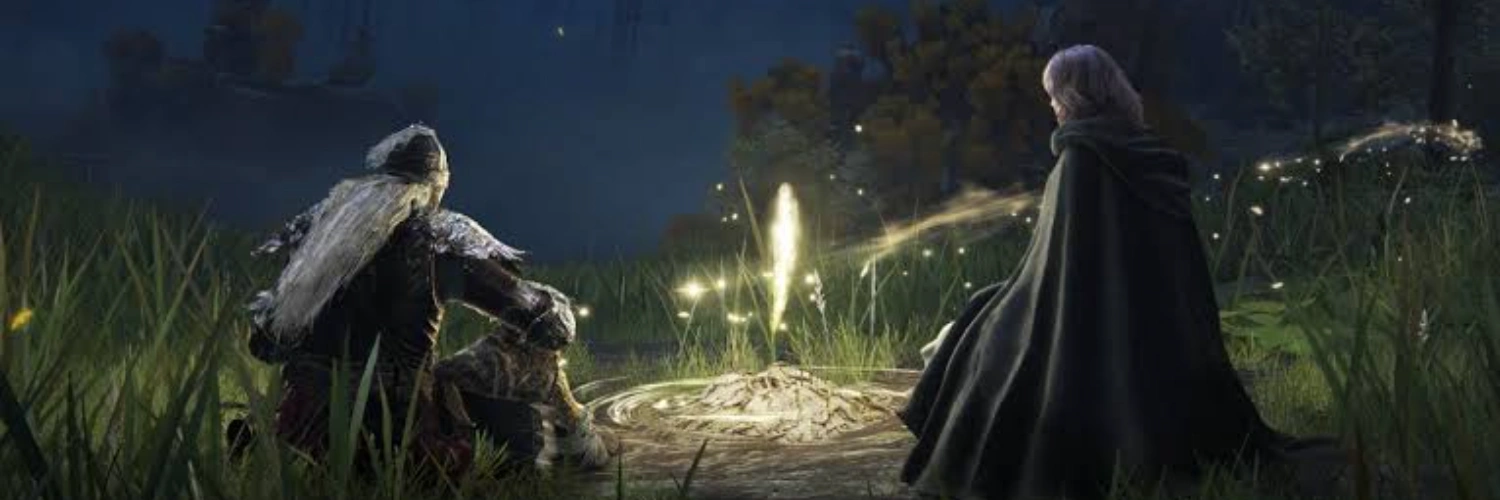
Miyazaki always manages to create absolutely incredible masterpieces. I’ve played almost everything FromSoftware has made, if not actually everything, and in my opinion, Elden Ring represents the near perfection this studio has achieved over the years. I know it is not a perfect game. In fact, I don’t think true perfection in a game really exists, at least not yet. However, Elden Ring comes incredibly close to it. I agree with some of the criticism it has received, such as its somewhat dated gameplay and the fact that FromSoftware still hasn’t fully adapted to modern tools and technologies like Unreal Engine, which are becoming increasingly common in modern triple-A games. At the same time, though, I understand the choices FromSoftware makes, and I don’t necessarily see these aspects as major flaws. Overall, Elden Ring is an incredible experience and, to me, one of the best examples of what FromSoftware has been able to achieve. There really isn’t much else I can say. It simply feels like the culmination of everything this studio has built over the years.
almost perfect, almost perfect, Rockstar Games is always excellent
very good story, in my opinion, it just has a few bugs and some somewhat outdated mechanics.
For me best game of all time, nothing else to say, just play it