Social network for gamers.
ugrdrms
386 logs · 2 posts
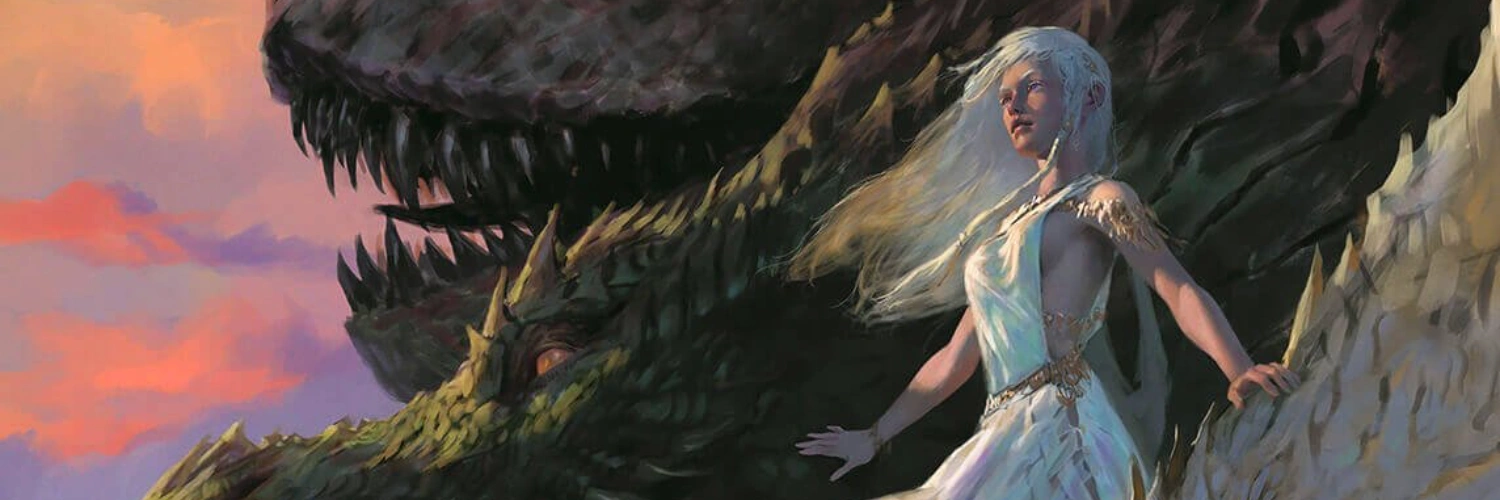
Oyunun artstyle'ı gerçekten çok güzel, sahnelerin kurulumu da uzun uzun bakmalık. Puzzle tarafında çok kompleks bir şey yok ama zaten daha çok hikâye ve görselliğin arasına biraz çeşitlilik katmak için kullanıldıkları hissini verdiği için bunu pek negatif yazmadım. Oyun kısa sayılır; aynı sakin tempoyu biraz daha çeşitlendirip derinleştirerek birkaç saat daha devam etmesini isterdim. Bir de oyuna gerçekten sıfır context ile girdim ve bir noktada “Acaba bu oyun korku/gerilim tarafına mı kayacak?” diye düşünmeye başladım. Sonradan bunun aslında oyunun bende yaratmak istediği duyguları ne kadar iyi verdiğinin bir sonucu olduğunu fark ettim. Kısacık süresine rağmen atmosferini bu kadar net hissettirebilmesi bence oyunun en başarılı tarafı.
Endacopia'nın 90'lar edutainment oyunlarının rengârenk ve masum görünen dünyasını alıp içine bu kadar rahatsız edici şeyler yerleştirmesini çok sevdim. Oyun sürekli komik olmakla huzursuz edici olmak arasında gidip geliyor ve bence en güzel tarafı da bu ikisini birbirinden ayırmaya çalışmaması. Bir sahnede gülerken, birkaç saniye sonra aslında neye güldüğünüzü fark edebiliyorsunuz. Görsel dili de bu ton değişimlerini taşımakta gerçekten çok başarılı. Point-and-click tarafı ise aynı ölçüde güçlü değil. Bazı bulmacalar çözmekten çok oyunun sizden ne beklediğini tahmin etmeye dayanıyor gibi hissettirdi. Yine de atmosferi, mizahı ve altında taşıdığı fikirler bunu benim için fazlasıyla telafi etti. Garip, komik, rahatsız edici ve beklenmedik şekilde şefkatli bir oyun. Endacopia'yı bu kadar seveceğimi gerçekten beklemiyordum.
If you're a fan of choose-your-own-adventure games, I think this is one you absolutely owe yourself to try. The worldbuilding is excellent, and I especially appreciated how the world continues to evolve alongside the passage of time, making it feel like you're living through history rather than standing still. Honestly, as long as you can make peace with the choices you make, it's the kind of game where you can walk away satisfied regardless of which ending you reach. The one thing that might not work for everyone is how uncompromising its choice system is. To make your decisions feel meaningful, the game commits to their consequences in a pretty strict way. If you're looking for a "choose your own adventure" experience where you can always get exactly the outcome you want, this may not be quite as satisfying.
A solid, straightforward survival horror game. As you'd expect, its visual style does a lot of the heavy lifting, but it results in an excellent atmosphere. From the very first minutes, I felt completely absorbed in the tension. The mechanics aren't exceptionally polished, but honestly, I didn't mind much. I was already in the mood for this kind of game, so I ended up enjoying pretty much everything it threw at me. I had also played Trench Face not long before this, so I was definitely in the right mindset for both the setting and its themes. Consider this a recommendation for anyone who enjoyed Conscript and hasn't come across Trench Face yet, as long as you don't go in expecting the same game.
I was genuinely curious what it would feel like to come back to this game after 15 or 16 years, albeit in its remastered form. Revisiting games that left a huge impression on me as a kid can be a gamble. Even if I still think they're good, sometimes I notice things that don't quite match the version I'd built up in my memory. This was the exact opposite. My biggest takeaway was, "Wait... this atmosphere still works this well?" Even today, the world this game builds completely pulls me in and makes me feel every bit of its setting. It's not even a particularly long game, so I'm honestly not sure why I waited this long to revisit it.
Unfortunately, even by the standards of its own time, the mission structure was fairly weak, and it has only aged worse since then. The repetitive gameplay eventually dragged the whole experience down. Since the story is such an important part of this series, that repetition inevitably affected how I felt about it as well. While I liked the presentation and the core premise, I found the narrative itself a bit underwhelming. Without the story fully carrying the experience either, the game ended up becoming a little tedious for me. I also want to give a quick mention to the DLCs. Since each one tells its own self-contained story, they ended up being the highlights of the game for me from a mission design perspective.
Unfortunately, this one ends up feeling like the middle chapter, and it's hard not to see it in the shadow of the first game. I also think the story is noticeably weaker this time around, but that certainly doesn't make it a bad game. It might not be the best choice to play immediately after Metro 2033, since the comparison is hard to avoid, but it's still a worthwhile stop for anyone who enjoys the series.
My feelings on this one are a bit mixed. I definitely enjoyed it to a certain extent, but I can't shake the feeling that a lot of that enjoyment came from the games it wears its inspirations on its sleeve, along with the atmosphere and overall vibe it captures. There are things it does well and others it doesn't quite pull off. Even though it tells an intriguing story that's worth following, the overall package ended up feeling a little forgettable to me. In the end, if you enjoy its atmosphere, the genre, and the games it's clearly inspired by, you'll probably have a good time. It just never quite became something truly special in its own right.
Unlike Mafia: Definitive Edition, this isn't a remake that completely transforms the experience, so it doesn't have that same extra layer of magic. That said, this game never needed it to begin with. Mafia II is already an outstanding game in its own right, and an incredibly satisfying sequel. It takes one of the classic mafia story tropes and executes it with confidence, capturing that strange blend of romance and misery that defines the genre. You can feel that bittersweet tragedy hanging over the entire story. It's the kind of game that reminds you why mafia stories are so enduring in the first place.
This is exactly the kind of remake I like to see. It feels meaningful, it modernizes the game without losing what made it special in the first place. Looking at the game itself, I really appreciate that it offers a more focused experience instead of trying to become a fully open-world sandbox. As someone who enjoys mafia stories, I also like that it never forgets this life is ultimately a dead end. That perspective gives the story much more weight. Tommy Angelo and the supporting cast are genuinely memorable and easy to care about, which is one of the most important things a story like this needs. Mechanically, I think everything does its job well enough, and the visual overhaul makes both exploring the city and simply taking it all in a nostalgic pleasure. The changes to the ending were the cherry on top.
The dreams this game made me build. The expectations it created. Before it became one of my biggest "what ifs," it filled me with a very different kind of excitement back in 2014. Coming back to it all these years later, and after spending so long away from anything Metal Gear, I didn't expect a game this short to transport me right back to that time. In another timeline, where history took a different turn... In another universe, as the best version of yourself, go on and live your life... I'll be the one fading away.
I found it thematically and atmospherically satisfying, but because I was so focused on completing my objectives, I can't say the horror fully landed for me. That said, I still think it's a strong experience both visually and in terms of presentation. Like most Chilla's Art games, it's an easy, bite-sized experience that flows well, and as long as they keep this formula feeling fresh, I'll happily keep playing them.
From a distance, I expected something like Papers, Please or No, I'm Not a Human, just on a much smaller scale. The smaller scope was exactly what I got, but beyond that, it turned out to be quite different from what I expected. The core concept is definitely similar, but instead of being a game about carefully solving a problem, it's more about following the conversations and enjoying where they take you. I ended up appreciating it much more for its dialogue than for the deduction itself.
Sometimes, especially with older games, simply seeing a series you love receive a decent adaptation is enough to enjoy it. I'd love for Vampire Hunter D to have an outstanding survival horror game, but unfortunately, that's not what this is. Instead, it's a fairly average game that does a respectable job of representing the series. The result is a game with a few too many prerequisites before I'd recommend it. You need to enjoy survival horror, be open to older entries in the genre, and, of course, already be a fan of Vampire Hunter D, the kind of fan who's happy just to finally have a game set in that world.
A worthwhile pick for fans of mascot horror games. Since this is only the first chapter, there are naturally some rough edges, but if you go in with expectations that match the genre, it's an enjoyable experience.
It has a strong visual identity and enough atmosphere to keep me engaged. It doesn't offer anything extraordinary, but I think the amount of content is just right for what it's trying to do. The day cycle helps reinforce the atmosphere, and the presence of the cow and the cat adds a surprising amount of charm for anyone who gets attached to little details like that.
I don't have much to add that hasn't already been said, except that, like every Remedy game, this one holds a special place in my heart. Its connected universe and use of paranormal themes are fantastic, but what really stands out is how confidently it embraces its identity. I wouldn't call it underrated, yet I still feel like the conversation rarely reflects just how special it is. I suspect that's because it isn't trying to dominate a single category or wow players with one clever gimmick. Instead, it quietly excels in almost everything it does, and then elevates it all with a generous dose of Remedy's signature weirdness. For those willing to buy into that vision, it's an unforgettable experience.
This is a good game. It won't work for everyone—especially those unable or unwilling to move past their preconceptions—but it's undeniably a good game. Of course, any discussion has to begin with Disco Elysium. A masterpiece. A once-in-a-generation game. As if inheriting that legacy wasn't enough, this game also has to carry the weight of all the ZA/UM drama attached to it. For me, the biggest thing working in its favor was a simple assumption: Disco Elysium isn't just difficult to replicate—it's difficult to even find your own voice in its shadow. That naturally lowered my expectations. Then Esoteric Ebb came along and proved that finding a unique voice was possible after all. I still don't think Zero Parades completely escapes Disco's shadow. There are moments where the similarities are obvious, and honestly, that's only natural. But that never stopped it from finding ways to resonate with me or developing an identity of its own. A huge part of that comes down to Portofiro. Not immediately, unfortunately, but as the game progresses, the city slowly settles into the center of the experience until it becomes a character in its own right. And credit has to go to Cascade as well. Maybe not a perfect protagonist, but through circumstance, perspective, and the way the game positions them within the world, they become genuinely memorable. In short, I went into this carrying almost every prejudice that could have made me bounce off it. Did it shatter all of them and become a new all-time favorite? No. But it did manage to become something special.
I went in expecting a more set piece-driven experience, so I was pleasantly surprised by how much room it gives you to explore and stumble into different outcomes. The game rarely tells you what to do. Instead, it trusts you to experiment with the items you find and figure things out on your own. That trust makes even the smallest discoveries feel genuinely satisfying.
I honestly don't know why I kept my distance from this game for so long. On paper, it has everything I usually love, yet I somehow kept overlooking it. I finally jumped in on a whim and enjoyed every minute of it. It starts with a clean, elegant setup: managing scarce resources while slowly learning how the world works. Before long, you're no longer trying to understand the setting, you're simply living in it and enjoying everything it has to offer. I can't wait to get lost in the sequel as well.
I really enjoy these short, set piece-driven horror games that feel like interactive short films, and this is one of the better examples of the style. It knows exactly what it wants to be and delivers it effectively.
Saying goodbye to Mimimi Games is genuinely heartbreaking. Since the pirate setting appealed to me more than their previous games, I decided to start with this before diving into Shadow Tactics or Desperados. I think they absolutely did justice to the tactical genre, while also making excellent use of a pirate theme that, despite having plenty of fans, still feels surprisingly underutilized in games.
I jumped into this because it looked fascinating, and both its genre and overall style immediately appealed to me. Seeing so many people praise it definitely helped. At first, I had a brief moment of thinking, "Maybe this one just isn't for me." But the moment I got even slightly take the full control, that feeling completely disappeared. It takes a very simple gameplay loop and elevates it through an interesting presentation. More importantly, it absolutely nails the addictive part of the experience. One of the year's sweetest surprises for me.
Honestly, this was a bit of a letdown. It just doesn't have much to offer, and I came away wishing there was more to it.
I can absolutely see why its cryptic nature won't click with everyone, but there's something strangely captivating about it. It doesn't offer a particularly long experience either, yet I still walked away happy with what it gave me.
The atmosphere alone was enough to win me over. Even though I don't think I fully grasped everything it was trying to say, the way it tells its story is so compelling that I would've found it impressive even as a short film. The fact that it embraces the flexibility of the medium and uses interactivity to elevate that storytelling only made me appreciate it even more.
The core idea and gameplay loop are genuinely fun, and the level-based structure feels like it should help keep the experience fresh. Unfortunately, progression being tied almost entirely to challenge completion becomes frustrating. It's the kind of game that could've been great to blast through once and then revisit later for fun, but instead it forces that replayability from the very beginning. I think that's a disappointing design choice.
I think a lot of the mixed reception comes from the fact that its characters aren't particularly easy to empathize with for most people. But much of their toxicity stems from the fact that they're fundamentally lost kids trying to make sense of themselves. I can understand why many players struggle with them their relatively privileged positions can make their problems seem trivial or self-inflicted. That's a fair criticism, but I don't think it hurts the game itself. At its core, it tells very relatable emotional stories, just through deliberately extreme characters and situations. My main criticism would be the replay structure. It's not a major issue, but I wish it were more flexible, especially since experiencing multiple endings makes the overall narrative significantly more rewarding. I've focused mostly on the story, but as a visual novel it's impressive across the board. From the presentation to the art direction, it has a distinct voice and a strong sense of identity. The slower pacing is also broken up nicely by the Mirage sequences, keeping the experience engaging. I'd been interested in this game from the moment i saw, but the mixed reactions made me question what I was getting into. In the end, I found both the characters and the game itself genuinely compelling.
Interestingly, even though I can clearly see its flaws and think it's lacking in certain areas, I still had a great time with it. I think that comes down to how simple its core mechanic is and how easy it is to jump into. It's worth giving a shot.
An absolutely rock-solid run & gun. Studio Pixel never fails to make me happy.
A small-scale adventure game with a lovely art style and a great use of color. The voice acting is surprisingly charming as well and fits the tone of the game nicely. A nice little palate cleanser.
Honestly, I didn’t go into this with particularly high expectations. Multiple endings have never been a huge selling point for me, and I didn’t expect the story to offer me anything especially new. Turns out I was wrong, I ended up loving it. To be fair, I can’t say my preconceptions were completely unfounded. In many ways, those aspects were exactly what I expected them to be. The difference was that I became genuinely attached to the characters and the story, and that carried the experience from beginning to end. Better late than never we finally made peace.
Not quite as good as I remembered, but still a blast. The action carries it. The leash, kick, and slide mechanics constantly push you toward creative kills, and that experimentation is where most of the fun comes from. The story, presentation, and attitude feel much more like products of their time these days, and the cliffhanger ending doesn’t do the game any favors either. Still, I can’t help but feel that it deserved a bit more recognition than it got.
This was a long journey in every sense of the word, and I have a feeling it’ll stay with me for a long time as well. I tried to explore every corner I could find, and what impressed me most was how the game seemed determined to fill every bit of space with stories worth discovering. That attention to detail is a huge part of why I became so attached to it. There’s not much left to add. For me, as for many others, it’s simply a masterpiece.
I think this is a genuinely solid game, especially from a gameplay perspective. In fact, most of my issues ended up being with the story. The biggest one is that Lara still never really gets a strong supporting cast around her, and the fact that she seems to bring destruction everywhere she goes made it harder for me to fully connect with the narrative at times. Putting that aside, though, it’s a very solid package. The balance between action, puzzles, and platforming is well executed, and the action set pieces are still exciting in that distinctly blockbuster way.
This game is full of weird, fascinating ideas. Whether through its visual design or the systems layered around its core gameplay, there’s always something unusual to discover. The story is fairly straightforward, but the characters are fun, and the world is strange enough to keep you curious. The mechanics, unfortunately, never feel quite polished enough, and there were times when the controls and systems got in the way of what I wanted to do.
Right from the start, I can say this came surprisingly close to scratching the same addictive itch as Balatro. They compensate for the lack of variety by building around chess mechanics, which gives the game a strong sense of replayability. Even exploring the menus and discovering things there created a really positive first impression. The only issue—and not necessarily a harsh negative, since there actually are quite a few gambits—is that after a while, I occasionally started feeling like I was playing the same kinds of runs over and over again. That holds it back from reaching its full potential a bit, though it’s still a polished experience in many ways.
There honestly isn’t that much going on gameplay-wise, but they’ve expanded the core concept surprisingly well. For some people, it might feel like the game offers almost nothing but weirdly enough, I still had fun even when I felt like I wasn’t really doing much. I guess it just scratched the gambler part of my brain a little too well.
This trend of “Balatro-fied” versions of classic games continues to be a lot of fun for me. This time, it’s presented as a meta dungeon experience built around combat and puzzle elements. They also managed to top it off with a surprisingly decent and enjoyable story, which made the whole thing come together really nicely. I had a great time with it.
Everything I enjoyed about the demo is still intact—but unfortunately, so are its limits. I still had fun with it, but it really does feel like a demo expanded into a full release. The core mechanics are solid enough, though the overall amateurish feel holds it back.
This game feels like a love letter not just to shooters, but to games as a whole. It has action. It has story and worldbuilding. It has references, secrets, and mysteries. Most importantly, it’s fully aware of what it is, and passion pours out of every part of it. That’s exactly why it goes beyond simple “good game / bad game” discussions. It feels like the kind of game someone could passionately love for a lifetime.
I’ve been a longtime fan of Risk of Rain, and I also loved playing Gunpoint back when it came out, so honestly, it’s a bit sad that Deadbolt somehow escaped my radar for so long. But like I always say: if there’s something we’re meant to love, our paths eventually cross with it. The gameplay is already fun on its own, and the game’s structure being so replay-friendly leads to a lot of great moments and experimentation. The setting and story are also compelling enough to keep you hooked, which made this an amazing experience to go back to.
This one really sticks with you. I’m sure there’s far more to unpack here, but even just reading it as the transformation of a lonely house is incredibly effective and surprisingly easy to empathize with. Also, even if I’m very late to it, this ended up being a fantastic introduction to Kitty Horrorshow. I’ll probably end up going through the entire catalogue at this point. I did notice the last release was back in 2020 and that there haven’t been updates in a few years, so I really hope a return happens someday soon and more importantly, that everything is going well.
The discourse around this game honestly feels unnecessary. It’s a small, charming experience. Sure, it doesn’t offer much in terms of gameplay, but it’s not failing at some grand ambition it’s simply not trying to be that kind of game in the first place. Just like when you go into a visual novel knowing what kind of experience it offers, I think the same mindset applies here. Naturally, the story and characters take center stage, and in both areas, the game does what it needs to do very well.
I’ve always had a soft spot for seeing franchises I love get at least decent game adaptations, so I still had a good time with this. That said, the lack of content was even more noticeable than I expected. And as a fighting game, I wouldn’t say it does anything particularly standout either, it’s a fairly average experience overall.
This one really hit different. The atmosphere and story are completely on point, it all flows effortlessly from beginning to end. And for this kind of experience, I think it has exactly the right amount of content. I stayed emotionally invested the whole way through.
There’s a genuinely fun idea here, and it feels like the kind of game that could grow into something bigger. Right now, though, it’s lacking some important things especially for an online game. Matchmaking and long-term engagement feel underdeveloped. Still, there’s clearly enough here to create great moments with friends. What frustrates me more is how Double Fine Productions keeps releasing games with barely any marketing support. Even Keeper seemed to quietly disappear despite its potential. Because honestly, if this game gets enough attention and support, I could absolutely see it becoming a long-lasting party game.
I never fully understood the small wave of hate around this game. I’m guessing the demo and its brief viral popularity created expectations that it was never really trying to meet. I had a great time with it. The parkour and platforming mechanics feel very fluid, and completing sections gives a satisfying sense of momentum and payoff. I do think the experience could’ve been stronger if it had been more focused, possibly even removing the enemies entirely and leaning fully into platforming and boss encounters. Even so, from its visual style to its atmosphere and mechanics, it ended up being a genuinely satisfying experience for me. I can’t call it perfect, but it doesn’t need to be. It found the right notes to leave an impression on me.
I think the fire mechanic adds a nice layer of enjoyment, but beyond that, there isn’t much that really makes the game stand out. Overall, it’s fairly average, but since it’s not very long, it still ends up being an enjoyable enough experience. Feels like a nice little side dish of a game.
Cute, but very short. It feels more like an introduction to its sequels, which I assume are much longer. The choices don’t really feel like meaningful choices so much as “pick the correct option to progress,” so it works better if you approach it as a mostly linear experience. Even if the ending feels a bit abrupt, it still has some genuinely charming moments.
I discovered this game through all the talk around its connection with Chirk, so maybe this will help someone else discover it too. If you liked it, or if the subject interests you, I’d definitely recommend checking out Chirk as well. This was a fantastic experience. The way the story is structured, how the relationship is allowed to develop slowly and naturally, and especially how the art is used to support the storytelling, all of it works really well. The text is carefully integrated into the scenes, playing a big role in conveying emotion. Combined with how well the story itself is handled, it results in an experience that really shouldn’t be missed.
Visually, it’s absolutely stunning, really impressive work on the art direction. The story is above average as well; even if it’s somewhat predictable, I found it easy to follow and engaging, helped a lot by the atmosphere. I wouldn’t call the mechanics bad either, they’re sufficient and reasonably satisfying, but there’s an unfortunate stiffness to how the game feels to control. Considering how long it’s been anticipated, that clunky feeling probably plays a big role in the overall reception.
A cheap joke—but This is Fine. Calling it a metroidvania wouldn’t be entirely accurate. It’s much smaller in scope, more like a concept or template built around that idea, so you’re better off not going in with those expectations. Once you set that aside, it’s actually very charming visually, and it fully embraces the meme’s aesthetic without it ever feeling out of place. The bosses are fun both in design and mechanics. For what is essentially a small, gimmick-driven meme game, it ends up being surprisingly satisfying—and that alone makes it a success.
Let’s get this out of the way: it hasn’t aged as well as I had hoped—but it’s definitely not unplayable or unenjoyable. The heavy metal aesthetic is still strong, and if you have any nostalgia for the game or a love for that style, there’s still a lot to enjoy here. Its menus and music are especially memorable. Beyond that, the action feels fairly standard for its time, but clean and serviceable. It’s also not too long, so even with limited mechanical variety, it doesn’t end up feeling lacking.
When you take an existing formula, polish it, and wrap it in easy-to-grasp, addictive mechanics, expectations tend to be low and that makes it easier for the experience to land positively. Naturally, after the Vampire Survivors this game tries to push things a bit further and experiment in its own way. I honestly expected it to feel much clunkier, so I was pleasantly surprised by how well it adapts the formula. Inevitably, it invites comparisons, and I wouldn’t say it’s quite as addictive as Survivors but I still had a great time with it.
A very clean pick for fans of hard platformers. The puzzles were quite fun, and it’s paired with a charming story presentation.
A no-frills tower defense game. Its minimalist design and simple mechanics make it very easy to keep playing. There’s not much more to it, but it’s also hard to say it’s lacking anything.
Everything the first game had—and more. That alone was incredibly satisfying, made it easy to jump back in, and let me fully indulge in everything I loved. If it doesn’t feel as special as the first game, I don’t see that as a negative—it’s simply because of what the original achieved. Beyond that, it once again delivers great characters, fantastic music, polished mechanics, and a strong variety in gameplay.
Packed with references and a noir parody vibe, which is more than enough to make it fun to play. The aesthetic, mixing 3D environments with 2D characters, doesn’t feel fully polished, which creates a slightly odd feeling I can’t quite put my finger on, but it’s not a dealbreaker. As a boomer shooter, the mechanics are fairly average, so they don’t really hurt the experience either. Overall, it’s worth playing for its presentation and references alone.
It almost makes you want to call it an underrated gem. The “underrated” part is clear, the “gem” might be a bit of a stretch. Think of it like a popcorn movie that somehow went even more under the radar than it should have. Its familiar fantasy setting makes it very easy to get into, with a simple and approachable motivation driving the story forward. I wouldn’t say it offers anything particularly deep, but most of the characters feel distinct and likable. The light romance mechanics are fun to follow, and the variety of characters supports that nicely. The combat and map systems aren’t especially deep either, but they work well enough to keep the pacing balanced. I’m not sure I’d recommend it out of nowhere, but I do think most people who try it will end up enjoying it.
I liked the core idea, and the art direction was quite strong. The presentation was decent overall, though the use of blur effects did strain my eyes a bit. Unfortunately, the execution didn’t fully work for me. The game is upfront about how your choices will affect things, but it didn’t feel consistent enough in letting you steer the experience in the direction you want. Despite having a fair amount of content, the foundation of its key moments feels weak, which really hurts the payoff.
There’s no real need to measure this against previous Grasshopper Manufacture or Suda51 games. If it catches your attention enough to make you consider giving it a shot, that’s already reason enough not to hesitate. It’s fun, the kind of fun I’ve been missing lately. I’m generally satisfied with what it offers, even if I wouldn’t say anything it does is top-tier or particularly polished. Still, it strikes such a nice balance in tone, variety, and feel that, while I might not replay it immediately, I can easily see myself coming back to it every few years. It really feels like those PS2-era action games you revisit from time to time.
First off, this isn’t a choice-driven visual novel—you’re simply experiencing the story. But wow, what a story. It’s incredibly well written and genuinely hard to put down.
I really love the world of Savvarah, and exploring it always brings me joy. I might be biased at this point, but I genuinely enjoy seeing different stories and approaches within the same setting. Each entry feels distinct despite sharing the same foundation, and I appreciate how the series keeps experimenting and improving. The artwork in this one stands out in particular, though I do wish the character dialogue matched the strength of the world.
I genuinely love the world of Savvarah, and exploring it always makes me happy. I might be a bit biased at this point, but experiencing different stories within the same world—and seeing the genre presented in new ways with each entry—is something I really enjoy. With the next game, there will be four entries in total, and while they share common elements, they don’t feel like copies of each other. I also appreciate how each new game tries to address past shortcomings or experiment with new ideas. For this one specifically, the artwork was particularly strong. On the downside, despite the world being very interesting, I wish the character dialogues were a bit better.
Yes—Disco Elysium and D&D, but… This isn’t a game about grand speeches (even though it has some) or deep philosophical introspection. No—despite its fantasy setting and epic moments, it’s a game about simple, human emotions. You can feel how much the developers care about their characters through how carefully their moments to shine are crafted. They have very human problems, and you approach them with equally human solutions—or at least find common ground with many of them. And when you can’t, it simply settles into that quiet truth: people like that exist too. So no, this is definitely not just a “poor man’s version” of something else—it confidently steps out of that shadow and stands on its own.
This isn’t just about this game, but it’s something this experience reinforced for me, I wish games like this came out of my own country too. It introduced me to a time period I knew little about and genuinely made me curious to learn more. And it does this not in a didactic way, but as a strong example of a genre I already love.
The aesthetic alone is enough to hook you, but there’s a surprisingly heartfelt experience underneath. And it’s free—no reason not to give it a try.
In five or ten years, there will be people whose taste in games is shaped by this. Beyond offering an experimental experience, it also stands strong as a platformer. The maps are fun to explore, the music is great, and its mechanics feel purposeful, constantly building on themselves rather than just existing. The humor works, the serious moments hit just as hard, and whenever the pacing dips, the game leans into its experimental side to keep you engaged. It also gives its characters room to shine, and you can really feel how much care and love went into creating each of them. At times, it even feels like the game is trying to reach out to the player directly. It’s not flawless, some moments can feel uneven, but that’s also part of its identity. More than anything, it feels like a conversation. And it has something to say.
Talking for demo, It’s still in a very early stage, and naturally the content is quite limited, so I feel like I have to take its potential into account. That said, despite clearly needing more polish and content, what it currently offers is incredibly fun when played with friends.
Criminally overlooked! Let me start by saying this definitely isn’t a game for everyone. Not because it leans too heavily into any extreme, but because it came out at a time when most players weren’t ready to explore it or to enjoy a game that doesn’t hold your hand. I have little doubt that if it had released during the golden age of CRPGs, it would be considered a cult classic today. And to be clear, I don’t mean that in a “git gud” sense. I’m not even sure I fully understood or mastered everything myself—and I don’t think you need to. It offers fantastic art direction, a unique and compelling mythology, and systems that feel refreshingly different from the usual genre conventions. At one point, I even found myself taking notes in my journal about quests, which added a whole new layer of enjoyment. If I had to sum it up in one sentence: with games like this, we often say “it’s fun to learn and master them.” With this one, I’d say “it’s fun to get lost in it.”
I appreciated how it handles a sensitive topic and the way it chooses to approach it. It’s not easy to convey emotions effectively in such a short experience, but it does so in a clear and concise way. The dialogue and voice acting were both quite strong, and the customization added a nice touch. It’s a small-scale experience, but a well-executed one.
Trying to understand this game is a strange process in itself. The game doesn’t really try to explain itself, and most of the time it doesn’t even seem interested in doing so. Yet you still find yourself trying to make sense of it. What stood out to me as I kept playing was this: the system works, but it doesn’t feel healthy. You learn it, adapt to it, progress through it, but everything you do comes with a cost—and that cost usually undermines the very system you’re trying to navigate. At some point, even the feeling of “playing well” starts to feel a bit off. At first, Color looks like a standard resource. You gather it, spend it, optimize it. But over time, it becomes clear that it’s more than that. It starts to feel like the weight of your decisions. When you spend it, something changes—but you lose something in the process. When you hold onto it, you don’t lose anything—but you also don’t move forward. The game constantly leaves you stuck between these two states. The distinction between the Sisters and the Brothers feels more defined. The Sisters lean more towards emotion, desire, and potential. Helping them feels like you’re nurturing something, but at the same time you’re making them dependent on you. The Brothers, on the other hand, represent order and control—but not a healthy kind of order, more like something trying to preserve decay. Both sides make sense in their own way, but neither of them feels “right.” This is where the game is at its strongest. It doesn’t tell you what’s right or wrong. It simply places you inside the system and leaves you alone with your actions. As you progress, you start to question what you’re actually doing: are you really solving anything, or just sustaining the same cycle in a different way? Despite all this, the game doesn’t stay in a purely bleak place. You’re still doing something, still moving forward, and that movement doesn’t feel empty. It’s uncomfortable, but also genuinely impactful. The one thing the game does very clearly is this: it doesn’t give you an answer, but the question it asks stays with you.
I’m not very familiar with the series and ended up playing it over a long period of time, but it was still an enjoyable experience for me. I really liked its aesthetic and the variety it offers.
I liked the themes it explores and the way it handles them, but I couldn’t really get invested in the characters. I wouldn’t call it bad, but it’s the kind of experience that doesn’t leave much of a lasting impression.
The ending didn’t fully satisfy me as a Sherlock Holmes story, but it still delivers a solid narrative, fitting characters, and a strong atmosphere. Even going back to it now, it holds up as a good Sherlock Holmes game. That said, it does feel dated as an adventure game, and while I enjoyed it, it’s best not to expect too much in terms of presentation or polish.
I loved the art, the characters, and the story—and for a free visual novel, what more could I really ask for? It left a warm impression on me as a small, charming experience, and I’ll definitely be keeping an eye on whatever they make next.
After replaying it, I can confidently call this the Call of Juarez: Gunslinger of the Prince of Persia series—the only difference being that it came out at the wrong time, in the wrong era for the franchise. Even though I love the Sands of Time trilogy, I remember loving this one as well for its distinct aesthetic and the different direction it took. Looking at it today, I actually think it has aged better in many ways. With just a bit of refinement—smoother platforming and more varied duels—it could still feel amazing to play even now. As a standalone experience, it also tells a solid story. The dialogue might come off as a bit cheap, but if you can embrace that slightly cheesy tone, it’s not really an issue.
A very chill idle game. It doesn’t offer much and progression is quite slow, but that’s also what makes it feel so calm. Since your interaction with the game is limited, it ends up being a soothing experience you can check in on while letting it run in the background.
Don’t expect a big game. It offers a small mystery experience, but it delivers it well enough. With more varied mechanics and a more layered story, I believe it could become something much stronger—so I’m definitely interested in seeing where it goes next.
In recent years, at least one game with this kind of aesthetic manages to win me over—and this was no exception. I can confidently say I got into it purely for the visuals at first. The core mechanics are solid, but what surprised me was how cozy and relaxing the experience turned out to be. Without even realizing it, I found myself growing attached to the creatures and preparing their meals with genuine care. It’s definitely a game I’ll bring up when talking about this kind of atmosphere.
It has a very fun gameplay loop—I’d honestly love to see a bigger, more fleshed-out version of it. The aesthetic and presentation also support that enjoyable core really well.
I think I have to admit that Prince of Persia: The Sands of Time is probably the better game in terms of its balance between action and platforming—and if I had played them in release order, my personal ranking might have been different. But fate introduced me to this one first, and its level of edginess, art style, and overall atmosphere really left a mark on me. Having recently played the PSP version probably boosted that feeling as well, but I still don’t think it has aged poorly enough to take away from the enjoyment.
A small, single-mechanic game—but a fun one. It knows exactly what it wants to be and delivers on it, with a nice atmosphere and a fast, smooth flow. Short, but just enough.
The atmosphere is on point. The mechanics aren’t exactly polished, but they don’t get in the way of the fun either—I still had a good time with it. The biggest issue is the lack of variety, even within a single run. The small areas repeat themselves too often, and with more variety, it could have been much more engaging in the long run.
The idea that “the essence of Prince of Persia is still intact” definitely applies here as well. Personally, I’d probably still prefer the original—but not because this one is worse.
The shift in atmosphere disappointed me back then, but the Prince/Dark Prince mechanic quickly won me over. That still holds true today. The fact that all three games have aged without significantly hurting the experience is a huge achievement.
Even for its time, it felt a bit clunky, and combined with the not-so-great memories I had of it, it still stands as the weakest link in this run. Revisiting it wasn’t a bad experience, but the drop in quality compared to the trilogy is hard to ignore.
This game was so empty that I ended up playing it all the way through. I can’t even say that as a positive—but since I like the franchise and the progression is incredibly simple, I saw it to the end. You can basically finish the entire game just by holding down the fire button, occasionally using skills if you feel like it.
It seems like some design-related issues may have held the game back from gaining more traction early on. In metroidvanias, the key driving force is usually the sense of progression and exploration, and the lack of balance and depth in those areas seems to have hurt the experience here. That said, for those who can look past these issues, it’s actually a pretty good game. Both the visual design and the gameplay are quite enjoyable. Where it really stands out, though this may not be for everyone, is its characters and dialogue. For a metroidvania, it features a surprising amount of character interaction, and for players looking for that kind of experience, it can become a very engaging game.
I’ve generally enjoyed Edmund McMillen’s games, and his visual style has become iconic at this point. Because of that, even before playing, I had this feeling of “this game won’t disappoint me.” And it didn’t. The game quickly made a name for itself thanks to its unusual ideas, bold design choices, and how well it utilizes a popular genre, but beyond just being “fun,” it’s also genuinely impressive from a design standpoint. It feels packed with content and variety, while also making full use of the gameplay systems the genre offers. What really stands out is how well it builds its core gameplay loop. It’s not just interesting, it’s genuinely engaging and easy to get hooked on. As for the negatives, and this might partly be on me, it does have a sense of humor that feels a bit outdated.
I was in the mood to revisit it, and it absolutely delivered the feeling I had been missing. That said, the combat feels less enjoyable than I remember—at least by today’s standards—and I definitely didn’t miss the tailing and stealth missions. Still, the atmosphere and story flow effortlessly, even if the modern-day segments have become almost irrelevant. I remember wanting more crew dynamics back then, and I still do, but just sailing around with the Jackdaw brings a kind of peace that’s hard to match.
The Last Remnant is a bit of a weird one from Square Enix. At first, it looks like a pretty standard JRPG, but the more you play it, the more you realize it’s actually trying to do something a little different. The most interesting part is definitely the combat system. Instead of controlling characters one by one, you command small squads, and battles sometimes turn into this controlled chaos. At first, it’s a bit confusing, and you might feel like you don’t fully understand what’s going on, but once the system starts clicking, the flow of battles becomes really satisfying. There are some cool ideas on the story side, too. The world revolves around these ancient artifacts called Remnants, and the entire political balance of the world is built around them. Kingdoms, power struggles, lost civilizations, there’s a pretty interesting backdrop there. That said, the storytelling doesn’t always fully live up to the potential of those ideas. Overall, the game feels a bit rough around the edges. Some systems are more complicated than they need to be, and the balance can be a little strange at times. But despite all that, it has its own kind of charm. It’s not a groundbreaking JRPG, but you can tell it’s trying to do something different. I still had a good time with it.
The smooth, fluid gameplay is easily the highlight, and the core idea behind it works really well. I had a genuinely great time with it. It’s not groundbreaking and it doesn’t leave a huge mark, but it’s the kind of game that’s simply easy to enjoy.
A solid metroidvania and a nice option for fans of the genre. The charming visuals, great music, and a story that’s genuinely pleasant to follow make it easy to get into. However, despite introducing a few interesting mechanics, the gameplay—especially the combat—ends up feeling a bit flat. Even though I kept playing and enjoyed it, the game rarely reaches those standout moments that really elevate the experience. Still—and this is the big thing—what it does offer is executed very solidly.
I genuinely enjoyed my time with this one, and it made me feel confident that I’ll keep enjoying LABS Works’ games. Compared to Astalon: Tears of the Earth, it feels like a small step back, but it’s still a solid experience. I can understand the game being a bit smaller in scope, though I have to admit that seeing them take a step forward instead would have been really exciting. Either way, I hope they keep making more games like this.
I played the full package, so I’m speaking from that experience. Like many others, the game first caught my heart with its visual design and theme. It had been on my list for a long time because of how popular it is, but I didn’t get the chance to dive in until recently. I should also mention that instead of playing it in big, focused sessions, I finished it gradually over a longer period of time. Even under those conditions, the game absolutely lives up to its popularity. Both the roguelike and dungeon crawler elements feel very polished. Mechanically, it’s a very clean experience, and the way it fully commits to its theme and tone elevates it even further. Managing the cult was just as enjoyable as the action itself.
A solid option for players craving more Balatro-like experiences. It does feel a bit too similar at times, but rolling dice is something true gamblers can never say no to
With beat ’em up games making a comeback these days, I find myself getting excited every time—especially when it’s based on a franchise I already like. Good animations help a lot with that initial hype as well. I wouldn’t say I don’t enjoy these games, or that most of them are bad. In fact, I usually play them from start to finish without getting bored. Still, at least among the ones I’ve played, many seem to follow the same path set by TMNT: Shredder’s Revenge without really adding anything new, and that’s a bit disappointing. Thankfully, since this franchise already has strong roots in the genre, they managed to deliver a game that’s even better than its predecessor. The story, boss fights, and the way the city is used all felt quite satisfying.
A true classic point-and-click adventure. With its writing, humor, and puzzles, it delivers exactly what you’d expect from the genre. I hadn’t played the studio’s previous games before, but after this solid experience, I’ll definitely be checking them out.
Addictive. It’s definitely a relatively small-scale game, but you can tell they’ve done everything they can to give it some longevity. The game’s biggest “sin” might actually be how fun and addictive its core mechanic is — to the point where the progression and side content can’t quite keep up. Still, considering its scope, I’d say it’s a surprisingly full and satisfying experience overall.
It doesn’t offer anything particularly special, but it also doesn’t fall short of what it presents on the surface. It delivers exactly what you’d expect from a classic indie horror game, and it does so at a decent level. Naturally, for fans of the genre, it makes for a few enjoyable hours.
If you love anime and you also love games, your expectations for anime games naturally drop to a certain level. Along with that, your enjoyment threshold drops as well. Even games that are far below the standards of their own genre can still be enjoyable when they bring together characters and stories you love. Sometimes, despite all that mediocrity, they can even earn a small place in your heart. You get used to bad games, honestly. And yet, you still feel like playing them. You still manage to enjoy them in some way. I’m not even talking about the rare cases with genuinely good stories—if a game is good even by the genre’s own standards, that already becomes a big pleasure. And then there are cases like this. A series that isn’t forgotten or left behind, but on the contrary, one of the biggest franchises of its era—and yet it gets a game so disappointing that you can’t fully grasp how bad it is even from the terrible-looking videos. Did I still play it until I had consumed all of its single-player content? Yes, I did. Did I occasionally have fun once the initial shock wore off? Unfortunately… yes, I did.
Over time, I had forgotten just how impressive the first game really was. Setting aside how ahead of its time it was and how it set the gold standard for melee combat, this game is still rock solid. The areas where its age shows the most are probably the visuals, but even there, since it never aimed for a realistic style, I don’t think it looks outdated. The combat is endlessly satisfying no matter how long you play. Exploring Arkham Island is genuinely enjoyable, and because the map is relatively limited in size, the game does its best to keep it feeling dynamic as the story progresses. Collecting Riddler trophies is fun, and the extra modes provide enough content to keep you engaged for quite a while longer. In short, it satisfies on a technical level, it satisfies in terms of content, and as a Batman fan, it absolutely satisfies me. Above all, it reminded me how games used to expand playtime before the open-world boom—by adding meaningful extras without ever diluting the experience.
I’m happy to see beat ’em ups making a comeback, especially through franchises I care about. That said, I have to admit that even though the visual quality bar is set quite high, many of these games still feel fairly standard when it comes to gameplay. I wouldn’t go as far as saying Marvel Cosmic Invasion didn’t entertain me, in fact, it left a more positive impression than the tone of this comment might suggest. This is more of a general frustration: now that the genre is gaining momentum again, I really wish developers were willing to experiment a bit more.
It gave me mixed feelings at first. I went in completely blind, simply because it looked interesting from the outside. When I realized it wasn’t what I expected, my initial reaction was: “This probably won’t be for me.” Turns out, it actually was.
If it had released back in its time, it probably would have been an even more impactful experience. Still, I really liked it as it is, and I don’t want to undervalue what it does well. It’s highly atmospheric and offers a genuinely enjoyable gameplay experience. For fans of space horror, I think it’s more than just a game where you simply walk from point A to B.
Games like this are great because they let me feed the gambler inside me. At its core, it’s a simple, addictive game that pulls you in the same way gambling does—but this time with a story, a sense of progression, and an actual narrative wrapped around it. We enjoyed every bite.
The game only really satisfies that simple sense of pleasure you get from digging. It's not doing this in a very detailed way but surprisingly committed way, but at the end of the day, that’s still what it does. Because of that, I never got bored digging, at least until I reached the end of the game. Could it have offered more? Of course it could have. But in a way, it doesn’t really need to—because this isn’t a game that dreamed bigger and failed to deliver. It’s a game that does exactly what it set out to do.
Among the numbered entries in the series, this one seems to feature the smallest mechanical leap. Because of that, it didn’t quite give me the feeling of “built on great foundations and elevated to another level.” That may sound negative, but it’s really more about expectations—because in practice, the game is already built on very fun fundamentals and has reached a fully polished state with the third entry. I still ended up genuinely loving my time with it. The amount of content is also very satisfying. I still prefer the style of the first game, but at least exploring the map feels enjoyable again rather than like a chore, and that alone makes a big difference.
First of all, Dragon Ball FighterZ is genuinely a good game. As a fighting game, it offers enjoyable mechanics and manages to appeal to both newcomers and players who want to dive deeper. It has that “easy to learn, hard to master” structure that keeps both sides satisfied. Visually, it brilliantly blends the cell-shaded style we’re used to seeing in Dragon Ball games with a 2D presentation. Combined with the smooth animations, it’s almost impossible not to get hyped during any action scene. And speaking of hype, the soundtrack supports this energy exceptionally well. When it comes to the story, the game presents a unique, original narrative and does so in a very entertaining way. It offers the right amount of fan service, plenty of new content, and an overall plot that stays true to the spirit of the series. All in all, it’s a strong title both as a fighting game and as a single-player experience. Thanks to its solid amount of content, it has managed to stay relevant for years without losing its appeal.
I think I played this feeling the same emotions I had during Telltale’s The Walking Dead Season 1. I liked the characters, I liked the dialogues, and I appreciated how the game was very upfront about the fact that—outside of a few key moments—my dialogue choices were just that: dialogue options. Instead of giving me the illusion of making major decisions, it was honest about offering choices meant to enhance the experience, not mislead me. That sincerity worked in its favor. Story-wise, I also loved that it didn’t just use superheroes as a backdrop, but actually focused on what heroism means, which made the whole thing even more immersive. All of this applies to the VN-like parts of the game. And then there’s the dispatch sections… Woah. If those were released as a standalone game, I’d gladly play them too. The character banter, the dynamics between them, and the simple fact that the mechanic itself is genuinely fun all worked together to elevate my experience even further.
It delivers a clean and straightforward arcade experience. Both visually and mechanically, it’s solid and fully delivers what it aims to offer. Is there anything particularly special about it? Unfortunately, not really. But for anyone who enjoys the genre, it’s a reliably fun way to spend some time.
I played this after We Know the Devil, and my thoughts are pretty similar: the artstyle once again gives the game a clear positive boost. But after playing Pillow Fight and then this as a second game from the same creator, what stood out most to me was how quickly and easily the characters convey intimacy. It’s clearly something to do with the writing, but I can’t analyze it deeply enough to explain why. Still, it was a very enjoyable second experience, and I’ll most likely play all of their games slowly over time.
Silksong is truly an exceptional game, and it’s clear that it arrives with an extra layer of polish compared to the first one. In fact, let me take a moment to praise the original as well: when you compare Silksong to Hollow Knight, the overall design philosophy remains remarkably similar. For most games, that could easily create the impression of a title built with the mindset of seven or eight years ago—something outdated or stuck in the past. But Team Cherry’s work proves just how timeless their design really is. Even in 2025, Silksong never feels old or out of step; instead, it delivers the same sense of freshness and craftsmanship that defined the first game, just elevated. And meeting the weight of so many years of anticipation is no easy task. The fact that Silksong manages to do so deserves serious praise.
Because I’m fond of Fireboy and Watergirl, I don’t want to come down too hard on this game. Those titles managed to be genuinely fun despite their limitations, which makes it all the more unfortunate that this one couldn’t reach a similar level. With a little more polish, it could’ve stood out much more.
Everything I said about the first game applies here as well — but this time, it elevates things technically and especially in its visual language, which in turn makes the storytelling even stronger. Its communication with the player is just as powerful as before, if not even more immersive thanks to its longer runtime. It feels like the developers truly mastered the tone and rhythm they had first discovered, and built upon it with remarkable confidence.
It immediately grabs you with its name and its visual style — and I’m sure the themes it explores, as well as the way it approaches them, resonate deeply with many players. But for me, those aren’t even its strongest qualities. What truly stands out (and this applies to the rest of the series or related titles as well) is how confidently it understands how to communicate with the player. It knows exactly how to speak to you — not just through dialogue or narrative, but through tone, pacing, and subtle emotional cues.
The game actually presses a lot of the right buttons, and I think the ideas — or rather, the dreams they had for it — are genuinely solid and enjoyable. It just never quite reaches a fully polished execution. Mechanically, I found it satisfying enough, and if you enjoy this kind of core gameplay loop, it’s good enough to keep you engaged. But unfortunately, it lacks the kind of extras that could draw in someone unfamiliar with the genre — or even offer something distinct for those who already love it. Its style really worked for me, both in terms of design and its comic book–like presentation, but I can’t deny it also felt quite generic at times — and that sense of familiarity bleeds a bit into the story as well. In the end, it’s a game that comes very close to finding its own voice, but it just doesn’t quite have the reach to get there.
It’s definitely not far from the Double Fine experience, but it’s important to go in knowing that this isn’t a full-fledged adventure-adventure game — otherwise, it might feel a bit underwhelming or directionless if that’s your expectation. Honestly, I didn’t know what to expect either — I started it mainly because the visuals caught my eye and, of course, because it’s a Double Fine game. Visually, it’s a real showcase; it actually feels closer to a Journey-like experience than a traditional adventure title. There’s something unique about it — I often found myself simply wandering around, feeling peaceful, stopping to take in the scenes. The sense of travel and discovery is truly well done. In the end, the positives I mentioned were enough to make it a pleasant experience for me, but if it had included a few more engaging puzzles, it could’ve been an unforgettable one.
A small but enjoyable game — when you let yourself get immersed, it offers a genuinely pleasant experience. That said, while I really liked the atmosphere, I found the overall content a bit thin for my taste. Still, it intrigued me enough to make me want to try out the other games in the series.
Now this one — compared to the previous entries — really feels like a genuine step back. I haven’t spent enough time with Storm 4 yet to make a direct comparison, but this one doesn’t even have an Adventure mode in its single-player section. What was already a fading joy for me has now disappeared completely, which makes it even sadder. Instead, we get two modes: History and Special Story. History removes even the pseudo-open world and turns into a slideshow of reimagined battles and boss fights from the previous games — most of which are poorly adapted. Special Story, on the other hand, offers a pretty solid Boruto storyline. I actually enjoyed it from a narrative standpoint, but in terms of presentation, it’s still a step down — not quite a slideshow, but the mix of cutscenes and fights doesn’t reach the series’ past highs. To make matters worse, there aren’t even any memorable boss fights this time. As for the core of the game — the fighting mode — for me, Ninja Storm 3 still stands as the peak. Visually, there are some impressive additions; the animations and jutsu presentations come close to their flashiest moments in the series. That said (and this might be a purely personal take), it sometimes feels a bit too over-the-top. It’s as if the series kept pushing the spectacle higher and higher until it finally went a bit too far. Mechanically, it’s been tuned to feel more responsive, but that also makes it lean more toward button-spamming. Still, since the core mechanics are as solid as ever, it remains an incredibly fun game to play.
I think this game is a bit underrated among the Naruto titles. While it definitely lacks some features compared to its sequels (which is understandable since it came out earlier), I think it makes up for that with its Adventure Mode. First of all, the combat mechanics are far from boring or clunky. In fact, the core systems from the Ultimate Ninja series were successfully transferred over and even polished in ways that the Storm series would later continue to use. Sure, the roster is more limited, but not to the point that it hurts the experience. The real highlight, though, is the Adventure Mode. It might not have flashy presentations or tons of cutscenes, but it integrates its three main mission types (outside of the three big boss fights from the main story) in a way that fits perfectly into the narrative. The semi-open world it offers is surprisingly enjoyable — whether you're chasing side quests, exploring the village, or interacting with characters as the story progresses, it delivers a genuinely fun single-player experience.
Honestly, I jumped into it full of excitement because it combines the style reminiscent of old Disney animations (actually, two distinct eras of them) with a horror atmosphere. Turns out, it had even more to offer me than I expected. I can absolutely understand most of the criticisms aimed at it. It never quite breaks free from its Point & Click roots, yet it’s also not fully designed as a Point & Click game, so it fails to execute its mechanics exactly as envisioned. I totally get that. But while playing, I couldn’t help but notice all the clever ideas sprinkled throughout — the developers clearly tried to introduce different mechanics and offer varied experiences. That not only kept me from losing interest (even though it might feel like a bit of a jumble to some) but also made me hopeful for what they’ll do next. Story-wise, I think it delivers a narrative that both carries the atmosphere this genre needs and helps you connect with the characters. And it presents all that in a way that complements those strengths. Finally, I’ll just say — I’ll always welcome any game that channels that Clock Tower-like spirit.
I wasn’t sure how much I’d enjoy it upon returning, but I couldn’t resist replaying the Darksiders games once more. Despite my initial hesitation toward a game I loved years ago, I was surprised by how well it has aged. Sure, some of the mechanics show their age and a few parts feel slightly outdated, but the fact that it hasn’t lost its sense of fun is genuinely delightful. Looking back, it stood out remarkably well in its time — especially during an era when the genre’s popularity was starting to fade — and managed to be a strong and memorable alternative.
The essence of Prince of Persia is definitely intact. Even back in the day — including the Java versions — the focus was in the right place, so I had as much fun as I remembered. That said, I can’t help but think it could’ve been better; with slightly more refined level design and tighter controls, it could have turned into a truly great game.
At first, I thought it was just one of those small indie horror games — which isn’t a bad thing at all. In fact, that’s one of my favorite kinds: simple yet intriguing horror experiences with a strong visual identity. But honestly, there’s more to this one than that. I don’t want to exaggerate, but it also tells a beautiful fairy-tale-like story. Combined with its visual charm, it delivers a surprisingly elegant experience.
I’ll put aside the fact that the Resistance series has faded away, because for its time, these were games that truly earned a place in our hearts. Even for that era, I’d say this level of a spin-off is acceptable — I can’t say I didn’t have fun, but it’s certainly not up to the quality of the mainline entries. It was a nice dose of nostalgia for something I missed, but not quite enough to make me forget its mediocrity.
I want to look at it both as a fighting game and as an adventure game, and when I compare it to the Storm 1-2-3 trilogy, I’d say it sits right in the middle on both fronts. In terms of combat mechanics, it doesn’t quite reach the peak of the third game; it actually feels closer to the first one in that sense. Still, with its added touches and a more polished presentation, the already fun core gameplay keeps it enjoyable for hours. When it comes to the character roster, it’s definitely broader than the first game, but not quite distinct enough to stand out on its own. As for the adventure mode, it’s quite far from what the first Storm offered — more in line with the third game’s approach — yet it manages to differentiate itself more clearly this time. Setting aside the mission structure and gameplay loop, it delivers a stronger atmosphere through its well-framed camera work and neatly designed set-piece scenes.
For those who love Dragon Ball and are open to playing GBA titles without prejudice, The Legacy of Goku holds the potential to be something truly special. And I’m not saying this out of nostalgia for 2003 — I’m saying it as someone who played this game for the very first time in 2025. Of course, the fact that I played it during a period when my passion for Dragon Ball was at its peak definitely adds to my experience, but I actually think that’s how these kinds of franchise games should be played — in moments when you’re already deeply connected to their world. The stronger your bond with the series, the more the game gives back. As someone who enjoys fighting games, I have to admit that The Legacy of Goku offers a unique kind of experience. Dragon Ball Z: Kakarot was also a very special game for me — it served as a kind of personal “safe zone,” a comfort space I could always return to. But Legacy of Goku manages to deliver something similar decades earlier, under much more limited conditions. Realizing that makes you appreciate just how ahead of its time it was. Of course, it’s not without flaws. Even if you look past the limitations of its era and hardware, its weak combat mechanics prevent it from reaching a level of quality that stands on its own beyond the franchise. Still, the way it captures some of the series’ most iconic story arcs and translates them to a tiny GBA screen — without losing any of their emotional weight — is genuinely impressive. Its semi-open world, varied NPC dialogues, and the subtle changes in reactions between characters all help create an experience that feels surprisingly rich. The game invites you to wander, explore, and lose track of time in a world that feels alive despite its size. In the end, The Legacy of Goku earned my respect not through nostalgia, but through the simple joy of discovery. It’s a game that tried — and often succeeded — to do what Kakarot would achieve years later. Carrying such a massive story on such a small screen is no easy task, yet it pulls it off beautifully. Even in 2025, it remains absolutely worth playing — and more than that, it reminds you why you fell in love with Dragon Ball in the first place.
I think this is a rather unlucky game. As a rogue-lite Prince of Persia, it inevitably feels smaller in scale coming right after the excellent Lost Crown, and its release being so close to Hades II—both early access and full launch—makes comparisons unavoidable, often making it seem weaker than it really is. The long shadow of Dead Cells, which the team worked on for years, also makes those comparisons even easier. To be fair, I agree with some of the criticisms. In terms of content, it falls behind all of the titles I just mentioned. At a time when the genre has been evolving so much, adding more tricks and layers could have turned it into something truly special. Dead Cells thrived on the fluidity of its motion, and while this game pushes that even further, it doesn’t quite balance it with enough unique ideas. The costume system works as a decent extra motivation, but without meaningful rewards around it, it feels underwhelming. On the positive side, the adaptation of Prince of Persia mechanics is excellent—the game flows like water, and both movement and combat are genuinely fun. I also really liked the world they built: it captures a much more oriental cultural tone, something that was largely missing from the originals. The designs, dialogue, and characters are overall quite enjoyable as well.
Surprisingly, it turned out to be a really fun experience for me. I say “surprisingly” because I always thought this version was just a rushed port made for the sake of release back in the day. I don’t want to exaggerate, but honestly, I found it more enjoyable than I remembered—maybe nearly more fun than Carbon.
Honestly, I think this game is better than it’s usually given credit for. If we look at it purely within the broader medium of games, I can’t really call it a “good game.” But considering the platform it’s on, the fact that it’s a franchise tie-in, and even more so a movie adaptation, it definitely doesn’t fall behind its peers. In fact, for fans of the series who are aware of those conditions, it can be quite an enjoyable experience. The game manages to reflect the world of the series in a reasonable way, both in terms of setting and mechanics.
A soul-soothing experience. It’s simply adorable—every element gently pushes you toward peace and joy.
Among the Naruto games, this is definitely one of the most refined as a fighting game. The battles are incredibly fun, and both the variety of characters and the differences in how they play greatly extend its longevity, which is a huge plus. Mechanically, it’s one of my favorites, and I truly think it builds on its predecessors. In fact, not just within Naruto titles, but even as a standalone fighting game, it’s an absolute blast. For competitive players, it might come across as unbalanced or too light on skill requirements, but with its low learning curve and the way fights flow so smoothly once you get into it, the game achieves something special. It’s similar to how Spider-Man’s web-swinging makes action games uniquely thrilling—Naruto games offer that same kind of distinction in the fighting genre, and this one takes it to the next level. That said, it’s disappointing to see the Adventure mode feel so shallow compared to the richness of the combat system. Since you can almost ignore it, I don’t consider it a major flaw, but the loop of cutscene–linear path–dialogue–battle quickly becomes tedious and uninspired. The mini-sequences sprinkled in don’t do much to improve things either. And in the free-roaming sections, both the controls and the content fall below par. I’ll set the very first Ninja Storm aside (its adventure mode was impressively full, varied, and engaging), but honestly, even many PS2 and Wii-era Naruto titles delivered a better adventure experience than this one.
I know—it doesn’t even come close to Wii Sports. By its own standards, it clearly falls short, and I have no objection to that. Yet the truth is, even in this state it’s fun, even in this state it’s worth the effort, and even in this state it’s a genuinely enjoyable game.
I booted up Slap Them All with genuine excitement, since the resurgence of the genre after Shredder’s Revenge makes me eager to try almost any new entry I see. Especially when a game comes with such charming visuals, my expectations rise even higher. Unfortunately, beyond its appealing art style, there isn’t much left to hold onto. From the very first stage, the gameplay feels thin and lacking, and since it never really evolves, it quickly falls into repetition and monotony. Normally this is the kind of genre I’d happily binge through to the end, but instead it became the kind of game I’d revisit occasionally for a single stage, only to shelve again—making it a much longer and less satisfying journey to finish.
One of the most unique versions of Tetris, and definitely a fun one. The variety of modes within the game is also quite satisfying. However, the single-player mode feels lackluster, and the inability to play the classic mode solo or even in local/online multiplayer leaves a noticeable gap. If the game didn’t include a single-player mode at all, I wouldn’t see it as a direct flaw—but as it stands, this version doesn’t come to mind first when I want to play Tetris. With more care and content added post-launch, it could have reached a much stronger position.
Its appealing style and the fact that I enjoy calm, slow-paced games made it very easy for me to get into. However, the repeating loop didn’t become more engaging as the game went on, which made the experience feel a bit short. The conversations with the guests were enjoyable, but I suppose I was expecting a bit more variety or surprises there.
I believe this is a game that has truly found its own voice. With a unique visual and presentation style, it successfully builds a captivating atmosphere. Its world is easy to grasp and step into, yet engaging enough to keep you invested. The little stories told through the friends who arrive at your door also help keep the experience lively.
A tiny, short, and compact game, yet one that makes the absolute most out of its runtime. I’m glad puzzle metroidvania games are becoming more common lately, and this one makes brilliant use of a flexible core mechanic that feels almost toy-like throughout the entire experience. On top of that, the puzzle quality was right on point.
Once again, it’s the kind of atmosphere that instantly pulls me in, there’s something about that rusty, decayed vibe that always gets me in the mood. But of course, the game offers more than just that. I especially appreciated how it relied on purely symbolic storytelling with zero dialogue. For its genre, the playtime is about average, but the way it manages to convey feelings purely through showing rather than telling is quite an achievement. It’s also clear how much care went into every aspect of the game. From the visuals to the sound design and the overall storytelling, everything felt satisfying and well-crafted.
I’m glad this one quickly caught attention thanks to its rising aesthetic. It’s not a long adventure, but it’s definitely a delightful one. There’s something incredibly satisfying about carrying cargo within its atmosphere—the game manages to deliver a sense of calm enjoyment in every moment. On top of that, the story turned out to be engaging to a certain degree, which made for a pleasant surprise.
I admit that the first game established such a solid foundation that, gameplay-wise, all the sequel really needed to do was continue building upon those fundamentals. But managing to make it feel fresh in the process is an achievement in itself, and that deserves recognition. Sequels can take different approaches: modernizing the formula after a long gap, or experimenting with a new loop; while more frequent releases rely on smaller shifts in dynamics to keep things fresh. Ragnarok may have arrived after what is, by today’s standards, a fairly normal gap, yet still long enough to raise expectations—and despite that, it managed to preserve its core loop while expanding on it in a satisfying way. On top of that, it improved where its predecessor was weakest: the boss fights, which I personally found much more engaging this time. I think it’s clear how much I enjoyed the game, so I don’t feel bad admitting that, for me, the first entry still had a special kind of grandeur. In my view, the sequel’s “one-shot” narrative framing wasn’t as strong, and its story was neither as epic as the original nor as personal as its predecessor.
It’s definitely better than the first game, but honestly, it doesn’t add all that much. Still, I don’t take that as a negative, because it doesn’t take any steps backward either, and it once again delivers exactly what it sets out to do.
I think this is a game that truly fulfills its purpose, and since I’ve been playing it regularly, I can confidently say it delivers on what it promises. It helps me work up a good sweat, provides solid practice, and does a great job of reinforcing posture habits. Could it have been better? Of course. But that doesn’t change the fact that it’s already good enough.
A simple and easy-to-understand game. From start to finish, there’s no confusion about what you’re supposed to do. The designs are really cute, but every now and then I found myself wanting to ask the screen, “Why are you all so dissatisfied?”
This feels like Nintendo-level polished. Honestly, between the two ninja games I was waiting for this year, my higher expectations were for Ragebound. And while I had fun with it, I found it a bit old-fashioned. Shinobi, on the other hand, which I expected to lean into a more retro design, surprised me by delivering both tons of content and modern touches that bring the genre into the present day. The art style and gameplay are already great, but the animations, effects, and UI are all designed with remarkable care. I was genuinely amazed by how thoroughly polished the entire game feels.
It could have been much better. I don’t really have a problem with its overall caliber — in fact, seeing a game released for an old IP at this level made me happy, because the first expectation is usually that it’s a passion project. Unfortunately, it never felt that way. It carries the air of something commissioned, and the rawness in both game design and especially animations becomes frustrating.
Since I already enjoy Journey-like games, it wasn’t hard for me to have a good time with this one. The reference material is so special that usually only a few aspects manage to carry over. This time, I was glad to find joy in many of them — but at the same time, I have to admit it felt a bit too similar. In that sense, I can’t say the game has fully found its own voice.
It aged far worse than I remembered. Not only has it aged poorly, but even among the games of its era and console, it feels incredibly bland. With a Sonic game, I rarely face the problem of not having fun — but here, it’s almost unbearable, bordering on unplayable due to how exhausting it feels.
This time, I can at least call it a bad Sonic game. Even though it surpasses the first game, it still ends up feeling short — though this is closer to what I actually remembered. Most likely, this is the one that stuck in my mind. Still, it serves as a sad reminder of just how rough that era was for Sonic.
It had been a long time since I truly felt the joy of accomplishing something together in a co-op game. Sure, great titles keep coming out, but personally, I hadn’t experienced the same feeling I got from Peak in a while. That might be why I enjoyed it extra, but the game genuinely delivers a very clean challenge. Unlike story-driven co-op games, you’re not simply experiencing a narrative together. Unlike puzzle co-op titles, there aren’t moments where you drift off to think alone. And unlike hardcore platformer co-op games, you don’t have to stay fully concentrated at the cost of losing dialogue with your friends. In that sense, Peak really lives up to its name. While playing, you can joke around endlessly with your friends, yet every small step forward still feels like an achievement. On top of that, the game manages to keep you connected to the team with small interactions, ensuring you never drift apart from the group.
First of all, I should say that I really do like Jujutsu Kaisen. But when it comes to this game, honestly, even trying it out feels like you’d either have to be a JJK fan or a big gacha enthusiast — and I can’t even say the latter, because as a gacha game on its own it unfortunately just isn’t enough. So what does it actually mean for someone who loves Jujutsu Kaisen? Honestly, if you enjoy both gacha and JJK, there are definitely things here you can get into. It tells its own story, and I don’t think it makes bad use of the universe. The animations and character designs are quite good, and while the gameplay itself doesn’t offer much, it’s passable. The real issue is that the core appeal of gacha games — collecting and developing characters — feels weak. The main reason seems to be the limited character pool.
There’s a misleading expectation here, unfortunately. It’s impossible for Peak of Combat to live up to its title. Judged as a Devil May Cry game or even a spin-off, it falls flat. But if you look at it as just another microtransaction-heavy mobile game, it doesn’t stand out as terrible among its peers. The issue is that the genre itself is already problematic, and once you attach the “Devil May Cry” label, the expectations rise to a whole different level.
If we’re talking about the current era, there’s an undercurrent pushing shooters up in popularity, and as a result we’re seeing plenty of boomer shooters. Robocop carries this style cleanly — it doesn’t try to stand out by doing something new, or by offering a story or setting we’ve never seen before, but it is executed very well. Where it does stand out is here: it respects both the relatively popular franchise it’s based on and the genre it belongs to. Combine that with above-average production values, and you get a clean, straightforward, well-made game.
A friend recommended this game to me saying, “You have to check this out, it’s Silent Hill for gays,” as if Silent Hill wasn’t already gay enough. Of course, I was expecting the “gay” part — what I wasn’t expecting was just how Silent Hill it actually was. It draws inspiration from many aspects, not just mechanically but almost mathematically. And even though it delivers a very different core atmosphere, it still manages to weave in that “rusty” vibe, which might not be genre-exclusive, but fits perfectly here.
I think it offers a genuinely solid experience. Visually satisfying, great music, responsive controls, and enjoyable level design. The only negative point I can make is that, despite having a high baseline quality, its ceiling never really breaks past a certain point. For me, it felt like a good but old game with a modern coat of paint. As an example — not in terms of genre, but as a side project comparison — the Curse of the Moon games, despite having less “modern polish,” still felt more contemporary in terms of game design. This isn’t a huge negative, but it’s a little disappointing knowing it could have been more. On a more positive note, I especially enjoyed the final boss and closing sequence.
With Gameboy-style visuals and a simple, charming loop, this game doesn’t try to be anything huge — and honestly, that’s not a bad thing. What you see is pretty much what you get, but in a good way. Considering its short length, it’s a sweet little experience.
It’s clearly inspired by the N64 era and also heavily channels that weird, offbeat style of '90s cartoons. It’s not a big-budget title by any means, but it definitely commits to the things it's trying to emulate. The story might not be super engaging, but the slapstick humor carries the experience pretty well.
Honestly, before playing, I expected it to be one of those games that just slaps on a small gimmick to an already familiar formula. I figured as long as the rest was solid, I’d have fun. But the part I thought would just be a minor feature — the Alters — turned out to be way more integral to the gameplay than I anticipated. On top of that, the unexpectedly heavy story focus turned the resource management aspect — which usually feels like a chore unless I’m really into the mood — into a meaningful tool rather than a goal.
As a Metroidvania game, its performance is mid, even sometimes below mid-tier, but its humor and dating segments carry it really well. I can honestly say I finished the game without getting bored for a second. It was quite fun.
At first, the Goat Simulator comparisons had me worried. Sure, the idea of total freedom in Bikini Bottom sounds interesting, but for a SpongeBob game—which aren’t exactly known for high standards—it didn’t seem very promising. But I was wrong. I ended up having way more fun than I expected, and in a way, that actually confirmed my initial skepticism: this game isn’t great, but it’s way more enjoyable than it gets credit for. I was surprised by how negative most of the reviews were, honestly. If you consider that it also targets a younger audience, I’d say it’s a perfectly decent game to just mess around and have some silly fun with.
I’ve always felt this game got more hate than it deserved—and even after replaying it now, I still feel the same way. I understand why people weren’t happy with the story or characterization, but honestly, there weren’t that many unexpected differences for a reimagined title. Sure, it was clearly affected by the trend of outsourcing projects to Western studios at the time, and that influence had its downsides. But to be fair, Capcom’s mechanical input really helped shape something solid. Even after all these years, I still had a good time playing it.
While I don’t think the main game did the character justice, playing them in their own DLC—albeit a low-budget one—was actually quite fun. Of course, it doesn’t offer the same level of gameplay variety as the main game, but I think what it delivers is solid for its runtime. Unlike the original series, this version of the character takes itself a bit too seriously. But with stronger writing, I honestly would’ve liked to see the DmC Devil May Cry branch continue.
To be honest, even though I ended up really loving—and even being moved by—this game, it took me quite a while to warm up to it. So I definitely can’t say it’s a game for everyone. If the core gameplay loop appeals to you—or if you give it a shot and find yourself enjoying it—you’ll likely end up loving the whole experience. I think the biggest make-or-break moment comes down to that loop. From what I’ve seen, some people were intrigued by the story but just couldn’t enjoy what they were actually doing while playing. I believe a big reason for that is the way major games today tend to stick within familiar mechanical loops, depending on their genre. Experimental approaches like this are often expected from indie titles, not AAA productions. Personally, one of the things that kept me at a distance in the beginning was the acting. It felt like the characters weren’t truly interacting—as if everyone had performed their scenes in isolation. Troy Baker and Mads Mikkelsen are exceptions, of course. And in the end, I have to say: the time spent with Lou played a big part in how emotionally connected I became by the finale.
Persona 3 Reload is one of those remakes done right. It faithfully brings everything that made the original special into the modern presentation style of the series. Could it have gone even further with modernization? Absolutely—and I probably wouldn’t have minded if it had taken a few more liberties. But in the context of the series and the tone of this particular game, this feels like the best possible approach. Persona 3 was my first Persona game, so it will always hold a special place in my heart. Next up is P4, and here’s hoping P2 eventually gets the same love.
A small and charming point-and-click adventure game—it’s really short, but its visual style and presentation alone are more than enough reason to give it a shot.
The visuals are incredible—claymotion has always been an eye-candy art style, but here, they’ve managed to create a language of their own. And it’s not just the visuals—the music and the storytelling share that same unique voice. So what is that voice, exactly? Even though it might not look like it at first glance, this is genuinely a game where you can find a sense of peace.
I actually played Deltarune Chapter 2 fairly recently—partly so it’d feel fresh when Chapters 3 and 4 release. But since it had been quite a while since Chapter 1—and because I got caught up in the excitement—I ended up replaying the whole thing when the new release came out. Even though Chapter 1 had already made a strong impression on me after Undertale, Chapter 2 removed any lingering doubt. Still, I wasn’t expecting it to hit me as hard as it did. I honestly still can’t fully wrap my head around how a game can communicate this much feeling through every single part of itself. I know for many people, this game needs no explanation. But I can’t help saying this: if you don’t love Deltarune, you must be actively fighting yourself. Just sit down and surrender to it. Once you do, you’ll realize—you’re not just playing Deltarune, you’re a part of it.
It might partly be because I hadn’t played a Telltale game in so long, but I genuinely had a good time with this one. As someone who’s had Telltale in their life since Sam & Max and Bone, I’ve seen their beginnings, their rise, and their fall. During their content-splosion phase, I eventually hit a point of burnout and distanced myself. But now, years later, playing a game in this familiar format again reminded me—it doesn’t actually feel bad at all. I just wish the Telltale formula had evolved slowly over time with more care and less frequency. Sadly, that’s not how it played out. Speaking of The Expanse specifically, I wasn’t familiar with the franchise, so I came in without any built-in investment. Still, it didn’t take long for me to warm up to the story. While it’s not a mind-blowing narrative, I found following it enjoyable enough. There are a few small tweaks and experiments within the usual framework, but overall, this is exactly what you’d expect from a modern-day Telltale game—no more, no less. So as long as you go in knowing that, you won’t be disappointed.
This is a game that’s not just a hidden gem—it’s the hidden gem among hidden gems this year. To put it simply, it doesn’t really matter what it’s referencing or what nostalgic notes it’s hitting. The game is rock solid and polished to a shine. It beautifully combines Zelda-style gameplay with Metroidvania mechanics. And that yoyo? It’s used in every way you can imagine. What’s more impressive is that these mechanics aren’t just made for one specific purpose—you use them for combat, traversal, and puzzle-solving alike. That kind of multi-layered design brings a uniquely satisfying feeling. I had recently played the demo for Mina the Hollower and was really hyped. Then I stumbled upon Pipistrello and the Cursed Yoyo, and I can confidently say: whatever I was dreaming the demo might become—this game already is.
It doesn’t break new ground in any area, but it’s just a clean, well-crafted game—you launch it, play, and there’s really nothing to gripe about.
One of the best examples of how timing and polished execution can define a game’s impact. First of all, the one-shot camera gives a tremendous boost to the atmosphere and immersion—it truly feels like playing through a single-shot film. When that’s combined with such polished mechanics, everything flows incredibly smoothly. Both combat and exploration become a joy. As for timing, the game hit at the perfect moment: it arrived when the series was in real need of mechanical evolution, long enough after the previous title to build anticipation, and delivered a tonal shift that emotionally resonated after the original story’s conclusion. From a broader perspective, it also dropped during a time when the industry was starving for strong single-player narratives and emotional father-son stories were riding a cultural wave. So it’s no surprise that the mix of quality and perfect timing caused such a big splash. My biggest criticism of the game—and it seems to be a common one—is the weakness of the boss fights. If it weren’t for a few specific boss battles being so thrilling and satisfying, I would’ve just assumed they couldn’t pull it off. But the fact that those standout moments exist actually makes the absence of similar quality elsewhere even more noticeable.
It was a musical that carried all kinds of emotions. That’s why it will always have a place in my heart as a musical—but as a game, it had me imagining much more when it was first announced. I hope they make even better ones in the future.
The kind of comedy you always get some enjoyment from in adventure games is blended really well with a Lovecraftian story here. Its cartoon-like visuals and well-written dialogues make it even easier to get immersed in the game. Many have probably said this already, but it’s also a nice homage both to the golden age of adventure games and to Lovecraftian themes. Turning the famous sword duel from Monkey Island into a rap battle is one of the sweetest examples of that. I can’t really speak for people who don’t usually play this genre, but for those who regularly enjoy adventure games, I’d say it’s definitely a good one.
For anyone who spent childhood summers in the countryside, this offers a truly unique experience. Maybe it’s just the longing for that sense of adventure, buried under the years — but this game captures the essence of a summer vacation perfectly. I haven’t played the previous games, so I can’t compare, but judged on its own, the sheer number of activities and the sense of exploration were at their peak for me. Among games that commit to delivering a single, specific experience, this one really stands out. Everything you’d associate with being a kid during summer break is here. And maybe that’s why, as the days passed and I neared the end, I truly felt that bittersweet ache — that this was a vacation that would now live on as a warm memory. I played it day by day and... It made my nose sting and left a smile on my face.
As the credits rolled, I couldn’t help but think: “This must be how those lucky mf’s felt playing FFVII back in ’97.” I was ready to love this game — but I wasn’t ready to love it this much. In so many ways, it hits the gold standard: A captivating story, masterful storytelling, naturally flowing dialogue, unforgettable music that matches every mood, jaw-dropping scenery you can’t get enough of, and an incredible variety of environments and enemies that constantly surprise you. And on top of all that, every mechanic feels tight, polished, and cherry-picked from the best in the genre — then pushed even further. They didn’t just do everything right. They raised the bar. In the end, it’s all here — and it’s all as it should be. Could I nitpick? Sure. I could ask for a few extra features. But honestly? It doesn’t matter.
I truly think this is a game with a voice of its own. The way it integrates the blueprint concept into both the narrative and the gameplay is impressive — and it complements the puzzle and roguelite mechanics quite well. For some, the lore and the process of getting into the puzzle mechanics might feel a bit challenging at first, but honestly, even just spending the first few hours exploring is a lot of fun. During that exploration, the storytelling slowly grows on you and pulls you in. I won’t lie — by the time I reached the endgame, I felt a bit less engaged than at the start, but the game truly delivers for a long stretch, and that’s worth appreciating.
I played this one slowly, using it almost like a comfort zone. Maybe part of the reason I loved it so much is tied to how I emotionally reconnected with the Dragon Ball series after Toriyama's passing. Let’s be honest — the game isn’t perfect by any means, not even in its core strength, the combat. Not that it’s bad — it’s not — but still. What really matters is that Dragon Ball magic is absolutely there. No matter which character I was playing or what part of the story I was in, I felt like I was there. I was part of the adventure. And beyond the action, being able to just chill — to experience the quiet moments — was beautiful. Just like in Spider-Man games, where swinging through the city without doing anything can be pure joy, here, flying around with music in the background was more than enough to clear my mind.
A lovely blend of 70s, 80s, and 90s vibes — you could even call it a small poem written for Clock Tower in its own way. As an adventure game, it was quite enjoyable. The puzzles were just right, and the atmosphere was absolutely excellent. I never once felt disconnected from the experience. I’m genuinely excited to see more Midnight Special releases in the future.
A small, short, but truly well-polished adventure game. It had been on my radar for a while, but with the second game coming out, I figured it was finally time to check it off my list. In the end, despite having a distinct voice of its own, the fact that I could pick up on familiar notes from other games I love made it easier to get immersed so quickly. The visual style, the voice acting, and the fact that it featured a variation of the investigative mechanics I really enjoyed in The Case of the Golden Idol — those were some of the game’s biggest highlights for me.
I’d say it’s almost identical to the first game — but considering there was only a year between releases and both games are relatively short, they honestly feel more like episodes of the same series. That might sound like a negative at first, but I actually really enjoyed it again — and in fact, this time the story and mystery pulled me in even more. If more adventures in this universe come along, I’ll gladly be back at the screen with the same excitement.
The game has a simple core loop that’s both easy to understand and easy to get into. If you’ve decided to give this a try just by looking at it, chances are you already know what kind of experience you're walking into — so it’s only fair to evaluate it within its genre. It doesn’t deliver anything groundbreaking, but it hits all the right notes where it matters. I can say with confidence that it offers a high-tempo, adrenaline-filled session — the rest really depends on how much you’re willing to immerse yourself or how much you enjoy this particular type of game.
There’s no shortage of good games out there — in fact, there’s quite a number of truly great ones as well. If we take subjective preferences out of the equation, even the games we could call masterpieces aren’t that few and far between. And what about timeless games? Yes, there are some of those too. Every era sees its share of experimental titles. And while we might not be flooded with games that inspire or get cloned by others, you only have to think for a moment before a decent list of influential ones starts forming in your head. But what happens when we talk about unique games? Some titles — whether due to their mechanics, their ideas, or simply being overlooked in their time — might not stay unique forever, but they remain unmatched in their moment. Disco Elysium carries every single quality I listed above. It’s unique. It’s inspiring. It will, without a doubt, be imitated for years to come. Amazing games will surely follow its lead — but whatever magic happened here, call it stardust, call it planetary alignment, it won’t happen again. And with everything that happened to ZA/UM as a studio, that fact became real for me. Maybe even they couldn’t have done it again, but at least, they could have let us hope. A game that’s this unique, that dares to be this different, that will likely stand the test of time — and as if all that weren’t enough, it’s polished to near perfection in every category we can measure.
I expected this Apple Arcade exclusive to deliver simple fun — and while I wasn’t entirely wrong, the simple fun it delivers ended up being more enjoyable than I anticipated. At its core, it’s a game about sneaking around and stealing food, yet it packs in more content than you’d expect from such a straightforward loop. I wouldn’t call it a must-play or anything that will blow you away, but if you're in the mood for some quick, simple fun now and then, it definitely deserves a shot.
Death’s Door is a beautifully crafted game. While it didn’t necessarily give me any “wow, I’ve never seen that before” moments, it delivers an incredibly smooth experience — from its tight gameplay mechanics to the design of its levels. Combined with its charming visual style, it offers a seamless, worry-free adventure that’s easy to enjoy from start to finish.
The dialogues were genuinely fun to follow, and the overall experience was quite entertaining. If the concept clicks with you, it’s definitely a nice little game worth adding to your to-play list.
Does it reach the standard of Origins or Legends? No, but I do enjoy these designs and visuals for Rayman. Conceptually, it doesn’t stray too far either. As a mobile game, it wasn’t bad at all.
Amanita Design games always feel special. No matter which one I’ve played, I’ve always been able to completely detach myself from my surroundings — that’s the kind of magic they have. And it’s not just about their visual style. Thanks to their presentation, sound design, and mechanics, you feel fully immersed in the game. Speaking specifically about Creaks, the puzzles were really enjoyable, and I think the difficulty curve was balanced well. Of course, there were moments I got stuck, but I never felt completely helpless. Even though it's structured into levels, the way everything flows together kept me from ever feeling disconnected from the experience.
Before playing this game, I had absolutely no prior knowledge about ENA. It only caught my attention because it had the kind of visual madness that I love. Now, I can confidently say that I’ve become a huge fan. This might be one of the most random "bullshit-goes-makes-sense" experiences I've ever had — and honestly, it doesn’t even need to make sense. It flows so smoothly and is designed so beautifully that it just works.
PS2 is such a console that even after all these years, there’s still an endless list of games to play. The Bouncer was a game I admired from a distance back then but never had the chance to play. I finally played it, and I can say that apart from looking cool for the 2000s and having nice graphics, it doesn’t offer much else — but at the same time, it doesn’t really have the time to offer much either. So it turned out to be a nice nostalgic adventure for me, without any regrets.
The art style and music are definite highlights. The mechanics are well thought-out and the level design is solid. Still, even with its short length, I felt like it started to get a bit repetitive a little too quickly.
It was a small and charming spin-off. On its own, it doesn't offer much, but for fans of the series, it's a nice piece of content.
I thought it was just a joke hype, but I was completely wrong. This is absolutely not a meme game — it's genuinely amazing. Not only does it bring the Animal Crossing experience to the table, but it also adds its own flavor through regular content updates and vibrant characters. It's truly a delightful game.
It turned out to be a puzzle game I truly enjoyed playing—an ideal experience to let your mind flow calmly and think things through. Despite its chill and charming presentation, it still managed to be satisfying as a puzzle game. Sure, it's not reinventing the wheel—there are definitely other games with similar mechanics—but with thoughtful design and great packaging, it delivers an experience that’s clearly above average.
It's one of those ideal puzzle games for relaxing and unwinding. The difficulty level is quite low, and in reality, nothing significantly new is introduced after the first level. Still, I can't say I ever got bored all the way to the final stage—the content feels just right. The Devil stages and stamp system also offer a nice little 100% completion distraction for those who want more.
It's already a common consensus, but it's worth stating the obvious—this game was made with the "Sonic but Fall Guys (or similar party games)" concept in mind. Does it deliver that level of fun? Not really. Is it bad? I wouldn’t say so either. The models are cute and fun, making it a fairly playable game for Sonic fans—at least on the surface. I say "on the surface" because being a free-to-play game, it's packed with microtransactions and similar mechanics. And in a party game that should be all about simple fun, that kind of thing quickly becomes exhausting.
Since the first game exceeded my expectations in terms of enjoyment, I jumped straight into the DLCs without hesitation. It was already difficult for them to match the level of the main game, but these two expansions turned out to be sweet additions that expanded the backstory and lore. What I liked most about both was their attempt to introduce new dynamics. The core formula was already strong, and the fact that they experimented with these additions through the DLCs is a great sign that they still want to build upon it. When comparing the two DLCs, I found myself more intrigued by the story discoveries in this one, and I do think it expanded the lore even further. However, in terms of cases, it didn’t feel as varied or captivating as the first DLC—at times, it gave me a sense of witnessing the same scenes again. That said, I really enjoyed this DLC’s unique mini-mechanic; it was a great addition.
I can't say this was an amazing game, but I also can't say I didn't enjoy it at all. Nothing in the game frustrated me or completely killed my interest, though that might be because I have a soft spot for the aesthetic of early cinematic action games. Of course, there are flaws—it definitely feels rough overall. At first, the Greek mythology theme and the hack-and-slash action kept me engaged, but it quickly became repetitive and lost its excitement.